The ball-playing goalkeeper is not a recent fashion: it is the consequence of a rule that in 1992 changed the position for good. Before then the goalkeeper was above all a shot-stopper and a last obstacle. Today he is the first man of the move, an extra defender who with his feet decides how the ball leaves the back. In this analysis we look at where the shift came from, at the two jobs the modern keeper holds together, and at what they cost.
Where it came from
The origin has a date. In 1992 football introduced the back-pass rule: from that moment the goalkeeper could no longer pick up with his hands a ball deliberately kicked to him by a team-mate. The rule was born of a precise frustration, the 1990 World Cup judged too slow and defensive, with too much time-wasting and too many balls frozen in goalkeepers’ hands. The idea was simple: remove that refuge to make the game more continuous.
The consequences were huge and not entirely foreseen. Forced to play with their feet under pressure, keepers and defenders had to learn a new trade. The one who grasped it before anyone else was Johan Cruyff on the Barcelona bench, who asked his goalkeeper and his defence to build from the back rather than clear it long. These are the seeds of what would become positional play, later turned into a system by Pep Guardiola.
Two jobs in one
The modern goalkeeper holds together two distinct functions, and it helps to separate them to understand them.
| Function | Term | What it does |
|---|---|---|
| Build-up | ball-playing keeper | the extra man in the move, plays out with his feet, beats the first press |
| Cover | sweeper-keeper | comes off his line, covers the space behind a high defence |
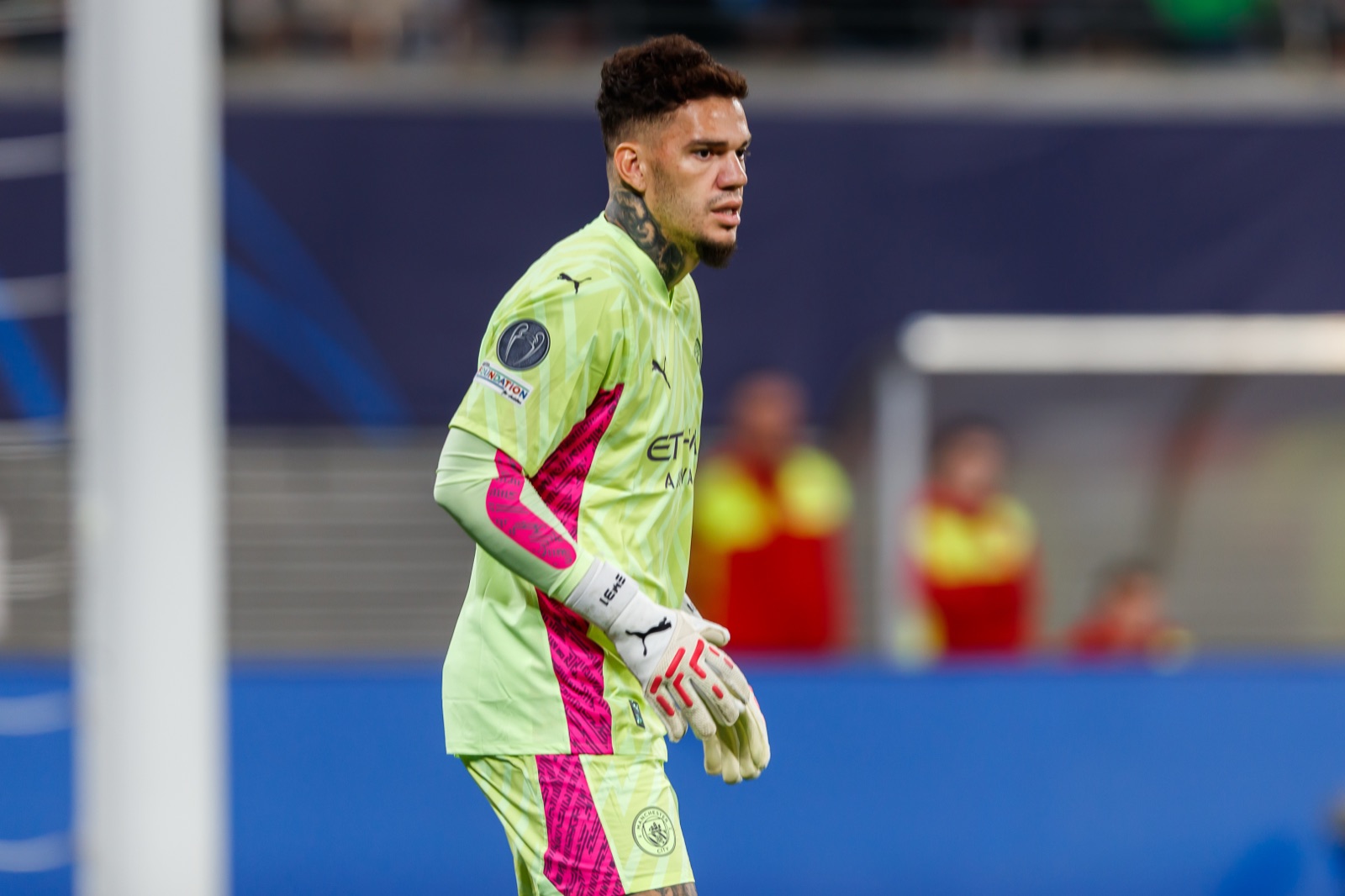
The first is offensive. When the team builds from the back, the goalkeeper offers himself as an outlet: since the opponent is busy marking the outfield players, the keeper becomes a free extra man, the classic plus one that lets you break the first line of pressure. Ederson at Manchester City is the model of this interpreter, able to restart play with short passing and with a long, accurate delivery alike.
The second is defensive. A team that plays with a high line leaves a lot of grass behind it, and someone has to guard it. That someone is the goalkeeper, who leaves his line to cut out through balls, behaving as a last defender. Manuel Neuer is the name that made this figure famous, the sweeper-keeper who defends thirty metres off his box.
Why it became central
The reason is that both functions solve a problem football created for itself. A side that wants to dominate possession has to get out cleanly from its own half against teams that press hard: without a goalkeeper able to receive and play, building from the back is a gamble. And a side that defends high to shorten the pitch exposes the space in behind: without a goalkeeper to cover it, that choice becomes suicidal.
The ball-playing goalkeeper, in other words, is not a technical fad but the piece that makes two very common choices sustainable: possession and a high press. Take him away, and the two ideas lose the support that holds them up.
The price of the risk
None of this comes free. The penalty area is the part of the pitch where a mistake costs most, because there is almost never time to fix it: a ball lost there becomes a goal at a rate that exists nowhere else. Asking the goalkeeper to handle the ball with his feet under pressure means accepting that, now and then, that ball will be lost in the worst possible place.
Teams that press high know it, and that is exactly where they aim their aggression: they close the short passing lanes to force the goalkeeper into a hurried choice, hoping for the error. Building from the back is therefore a constant balancing act between the advantage of the plus one and the danger of the mistake in the box. A keeper good with his feet does not remove the risk, he makes it manageable.
Outlook
Within a single generation the goalkeeper has gone from saving specialist to an outfield player wearing gloves. Today no top club buys a keeper looking only at his reflexes: they weigh his feet, his reading of space, his personality on awkward balls. It is why a good ball-playing goalkeeper has a market and a value that twenty years ago would have been unthinkable.
The direction looks set. As long as football rewards possession and the high press, the goalkeeper will remain the first builder and the last defender at once, the player on whom two of the most widespread ideas of the modern game rest. A rule devised in 1992 to make matches less dull ended up creating the most transformed role in modern football.
Sources: public documentation on the history of the back-pass rule (IFAB, historical archives), journalistic and tactical sources on the evolution of the goalkeeper’s role. Analysis for explanatory purposes.
Frequently asked questions
What is a ball-playing goalkeeper?
A goalkeeper who, beyond making saves, takes an active part in his team's build-up. With his feet he becomes an extra man in the first phase, helping to beat the opponent's press, and with his reading of space he covers the area behind a high defensive line.
Why did goalkeepers start playing with their feet?
The turning point is the back-pass rule, introduced in 1992: since then a goalkeeper can no longer handle a ball deliberately kicked to him by a team-mate. Forced to play with their feet under pressure, keepers and defences had to learn to build play instead of hoofing it long.
What is a sweeper-keeper?
A goalkeeper who comes off his line to cover the space behind the defensive line, acting like an extra last defender. It is the defensive function of the modern keeper, complementary to the build-up role.
Who are the reference points for the role?
On the build-up idea the mind turns to Johan Cruyff, who at Barcelona first asked his goalkeeper to play out, and to Pep Guardiola, who turned it into a principle. Among modern interpreters, Ederson is the model of the keeper who builds with his feet, Manuel Neuer that of the sweeper-keeper.
What are the risks of having the goalkeeper play?
Every ball handled with the feet inside your own box is a risk: a mistake there almost always becomes a goal. Teams that press high aim precisely to force the goalkeeper's error. The build-up advantage must always be weighed against that danger.