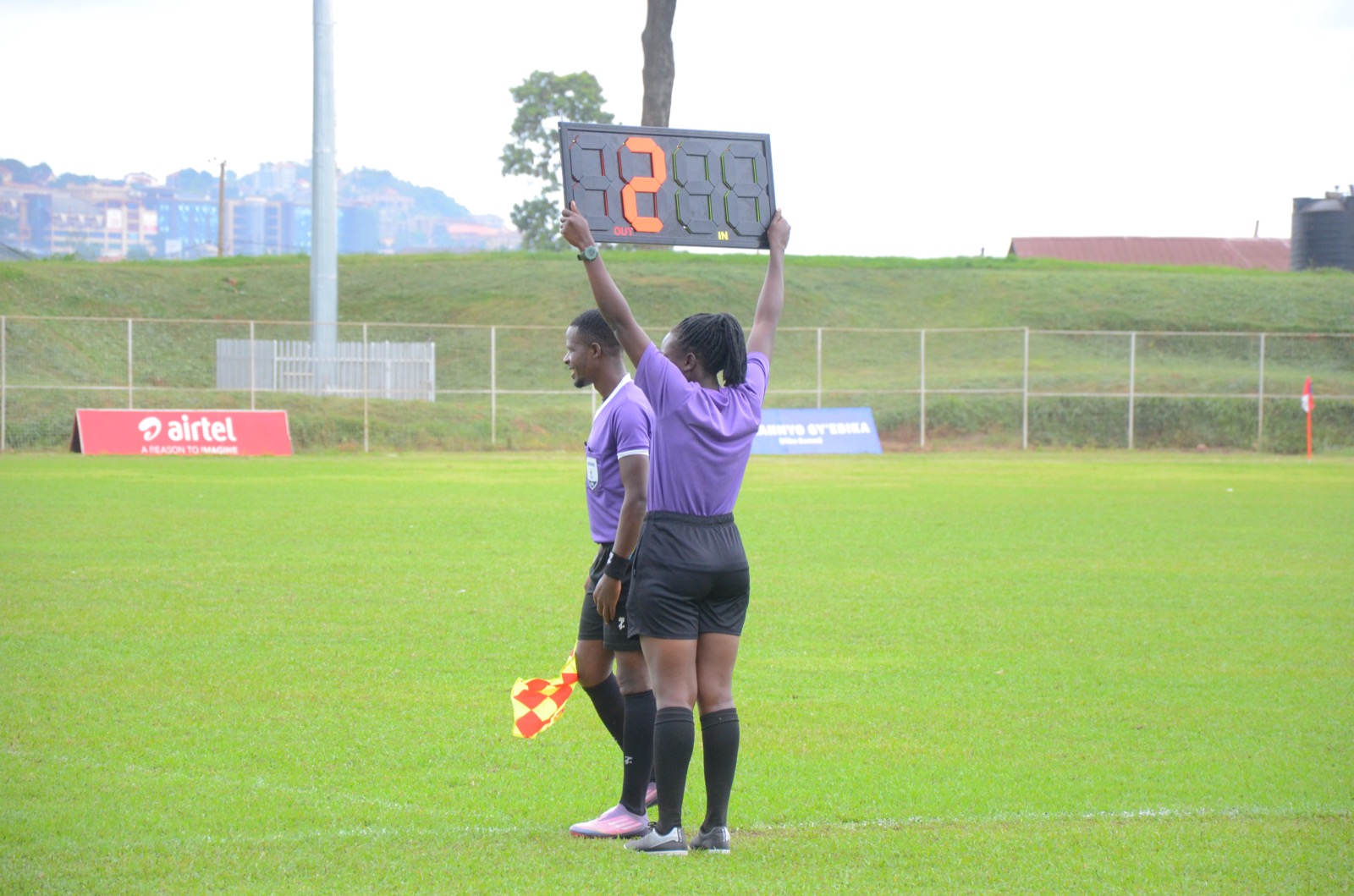
From this season a substituted player has ten seconds to leave the pitch. Take longer and the teammate waiting to come on stays off until the first stoppage after a minute has elapsed from the restart. It is one of the changes to the Laws of the Game approved by the IFAB and effective from 1 July 2026, first seen at the World Cup and now arriving in the domestic leagues.
The rule at a glance
| Item | Detail |
|---|---|
| Requirement | Leave within ten seconds of the board being displayed |
| With no board | Ten seconds from the referee’s signal |
| Sanction | The substitute enters only at the first stoppage after one minute of running clock from the restart |
| Practical effect | The team temporarily plays a man short |
| Exceptions | Safety or security reasons, injury to the player |
| In force | From 1 July 2026, debut at the 2026 World Cup |
Why a rule about leaving rather than entering
Anyone who has watched football for a few years knows the scene. Eighty-eighth minute, a team a goal up, the number of the player furthest from the bench appears on the board. He starts walking towards the centre circle, changes his mind, heads for the opposite touchline, hugs a teammate, wipes his face.
That scene almost never produced a card, because the line between slowness and time-wasting is impossible to fix by eye. But it did produce forty or fifty seconds, repeated three times, and with them a not insignificant share of the result.
The IFAB has taken the less elegant and more effective route: instead of asking the referee to judge intent, it put a number on it. Ten seconds, counted from an event everybody can see.
The sanction is the interesting part
The genuinely new element is not the count, it is what happens when it expires.
In football almost every disciplinary punishment lands on the individual: caution, dismissal, ban. Here the consequence falls on the team, and immediately. The player who walks off slowly takes nothing personally, but his ten teammates spend a minute a man short at the point of the match where that minute weighs most.
It is a mechanism that changes the arithmetic. Gaining forty seconds at the risk of playing sixty with ten men almost never pays, and it fails to pay so obviously that no tired player has to make a clear-headed decision about it. The rules that work are the ones that do not ask anybody to be reasonable.
A caution for excessively delaying the restart remains possible: the two things add up rather than replace each other.
What changes for coaches
Three practical consequences, in order of importance.
The first concerns timing. Substituting in the ninetieth minute to eat the clock no longer works, and that gives the substitution back its original purpose: changing something on the pitch. Expect more changes between the seventieth and the eightieth minute, while they still mean something in football terms.
The second concerns who gets substituted. If a player is on the far side from the bench, ten seconds is tight even in perfect good faith. Benches will have to account for that, and the choice of whom to withdraw will start to interact with where that player happens to be when the count begins.
The third concerns preparation. A minute with ten men is not a theoretical punishment: it is a passage in which the team has to know how to defend a man short, and that situation needs coaching the way a set piece needs coaching.
The full picture of the changes
The ten-second rule does not arrive alone. It belongs to a package the IFAB built around the same problem, actual playing time.
The same group of amendments includes the requirement, for a player assessed on the pitch or whose injury stopped play, to remain off the field for one minute of running clock after the restart. Then there is the visible five-second countdown on throw-ins and goal kicks, which we have written about before, and the extension of VAR to three new situations: a clearly incorrect second yellow card, mistaken identity, and, optionally, a clearly incorrect corner kick provided the correction is immediate.
Taken together, these measures describe a clear direction. They are not trying to make football more spectacular: they are trying to make the match last as long as the scoreboard says it does.
What to watch in the opening weeks
The first month will tell us two things. The first is how often the sanction is actually applied: a rule that never triggers because nobody tests it has already won, and a low count will be a good sign rather than a bad one.
The second is subtler and concerns referees. The exceptions for safety and injury exist and are right, but they are also the only grey area left in an otherwise mechanical rule. That is where the arguable part of this law will be settled, not on the stopwatch.
Sources: IFAB official announcements on the Laws of the Game changes, Sky Sports, national associations’ briefings to referees.
Frequently asked questions
What exactly does the new substitution rule say?
The substituted player must leave the field of play within ten seconds of the substitution board being displayed or, where there is no board, of the referee's signal.
What happens if the player takes longer?
The substitute is not permitted to enter until the first stoppage after one minute of running clock has elapsed following the restart. In the meantime the team plays a man short.
Are there exceptions?
Yes. The rule does not apply where leaving within ten seconds is impossible for safety or security reasons, or because the player is injured.
When does it come into force?
The changes approved by the IFAB apply from 1 July 2026, with competitions already under way allowed to adopt them earlier. They made their debut at the 2026 World Cup.
Is the delaying player also cautioned?
He can be. The disciplinary sanction for excessively delaying the restart still stands, and it adds to the penalty imposed on the team.