On Sunday 16 August, in Cardiff, Arsenal open the English season against Manchester City carrying a number that says more than a league table: nineteen goals from corners in a single Premier League campaign. It is the competition record, three better than the previous mark, which had stood since 1992-93. It is worth looking at closely, because it describes a shift that concerns every team, not only the one that set the record.
The season in numbers
| Item | Detail |
|---|---|
| Arsenal corner goals, 2025-26 Premier League | 19 |
| Previous record | 16 |
| Previous record holders | Oldham Athletic 1992-93, West Bromwich Albion 2016-17, Arsenal 2023-24 |
| Second best in 2025-26 | Tottenham, 15 corner goals |
| Arsenal’s set-piece coach | Nicolas Jover, at the club since 2021 |
| Next competitive match | Community Shield, 16 August, Principality Stadium, Cardiff |
Why the set piece specifically
There is a technical reason why this phase has grown faster than the others, and it is almost banal: it is the only game situation that can be reproduced in training exactly as it will occur in a match.
In open play nothing repeats itself twice. The position of the twenty-two players, the speed of the ball, fatigue, the opponent’s decision: every sequence is a one-off event. On a corner, by contrast, the ball is stationary at a known point, distances can be measured, opponents are lined up and there are several seconds available to organise. It is a deterministic phase inside a game that is not deterministic at all.
Hence the investment. If part of the game is repeatable, training it produces a measurable return, and whoever trains it becomes a professional figure with a defined role.
What a set-piece coach actually does
The job is not about designing spectacular routines. It is about four decisions taken over every single corner.
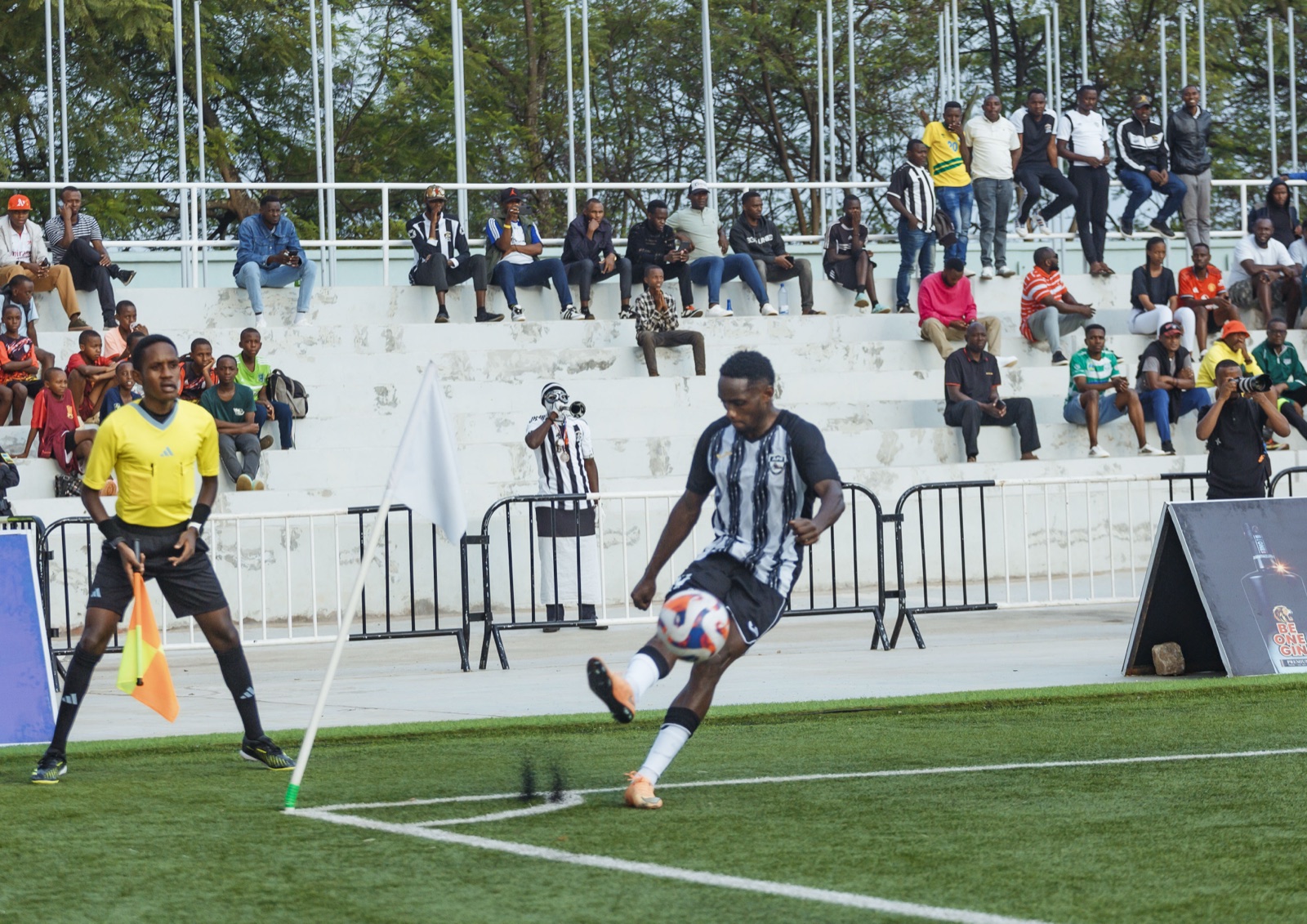
The first is the delivery: a ball that swings towards goal or away from it, driven to the near post or floated to the far post, into the six-yard box or towards the edge of the area. Every choice opens one zone and closes another.
The second is the starting movement. No attacker begins from the point where he wants to make contact, because he would already be marked there. He starts elsewhere and arrives at speed, exploiting the fact that a moving player almost always beats a stationary one.
The third is freeing the runner. Within what the referee allows, players cluster together to obstruct the path of opposing markers without committing a foul. It is the most studied part, and the most disputed.
The fourth is the least visible and often the most profitable: managing the second ball. Most corners do not produce a goal at the first contact, they produce a rebound, a short clearance, a loose ball spilling out of the box. Whoever has decided in advance where to station the players left outside the crowd collects those balls and attacks again, instead of conceding a counter.
The record says it is not about one man
The most interesting figure in Arsenal’s season is not the total, it is the spread. When the count had reached seventeen, five different names had already scored: three for Jurriën Timber, two each for Gabriel Magalhães, Mikel Merino and Martin Zubimendi, plus two own goals forced by pressure inside the box.
That is the difference between having one strong header of the ball and having a mechanism. If the goals all came from the same striker, an opponent could double up on him and close the problem. When they come from five men starting in different places, every defensive choice leaves someone else uncovered.
The same applies, in reverse, to the figure of the dedicated coach. Nicolas Jover is French, started out as a video analyst at Montpellier, first did this job at Brentford between 2016 and 2019, spent two seasons at Manchester City and has been at Arsenal since 2021. It is a sign that the role now exists as a profession in its own right, with a career path that runs across different clubs.
And the defending side
The defensive half is less discussed but it is half of the problem, and it comes down to a choice between three set-ups.
Zonal defending assigns each player a space to protect. It covers the area where the ball most often arrives, it concedes no blocks because nobody is chasing anybody, but it leaves the runner arriving from outside unattended.
Man marking assigns each defender an opponent. It follows the danger wherever it goes, but it is vulnerable precisely to those clustered movements: one team-mate crossing in front of the marker is enough to free his man by two metres, and two metres in the six-yard box is a goal.
In practice almost every side uses a mixed system: two or three players zonally in the hot spots, the rest man to man on the best headers of the ball, one or two kept outside the box for the second ball and the counter. The difference between one team and another is not the choice of system, it is the discipline with which it is repeated match after match, every time the opposition wins a corner.
What to watch on Sunday
The Community Shield is being played at the Principality Stadium in Cardiff, not at Wembley, because the London stadium is hosting a concert: it is the first time since 2006 that the fixture returns to Wales. Arsenal arrive as Premier League champions, Manchester City as FA Cup winners.
Beyond the result, which counts for little in mid-August, a game like this shows two things clearly. The first is how many players Arsenal send into the box on corners and how many they hold back: that is the measure of how much transition risk a side accepts in exchange for bodies in the opposition area. The second is who attacks the near post. In most modern routines that player is not there to score, he is there to flick the ball on or simply occupy the goalkeeper: the goal is scored by the second or third man arriving.
If in August it looks like a detail, it is worth remembering that last season that detail ended up in the net nineteen times.
Data and information gathered from public sources: Premier League statistical archives, specialist analysis of competition data, official Football Association communications and the British sports press.
Frequently asked questions
How many corner goals did Arsenal score in the 2025-26 Premier League?
Nineteen, the highest figure ever recorded in a Premier League season. The previous mark was sixteen, shared by Oldham Athletic in 1992-93, West Bromwich Albion in 2016-17 and Arsenal themselves in 2023-24.
Who is Nicolas Jover?
Arsenal's set-piece coach, a Frenchman who joined the club in 2021. He had previously worked at Montpellier as a video analyst, at Brentford from 2016 to 2019, where he first held this specific role, and at Manchester City from 2019 to 2021.
Why have set pieces become so important?
Because they are the only phase of play that can be rehearsed in training under exactly the conditions in which it will occur in a match: the ball is stationary in a known spot, distances are fixed, opponents are set. Everything else in the game varies.
Is it better to defend corners zonally or man to man?
There is no single answer. A zone protects the space where the ball most often lands but leaves runners free; man marking follows the opponent but can be undone by blocks. Almost every side now uses a mixed solution.
When is the 2026 Community Shield played?
Sunday 16 August 2026 at 3 p.m. local time, at the Principality Stadium in Cardiff, between Arsenal, 2025-26 Premier League champions, and Manchester City, FA Cup winners. It is not at Wembley because the stadium is hosting a concert.