On 1 September 2026 the Lega Serie B announced the start of the tenth edition of Primavera 2, which with its title sponsor is called Primavera 2 Cisalfa Sport. But the news that changes matches is a single line of the rulebook: from this season only one fuoriquota may be sent onto the pitch in each game, against three last season. Fuoriquota is the Italian term for a player who falls outside the age window the competition is built on, what English football calls an overage player.
The exact line, taken from the document and not from the press release
The launch page of 1 September, that is press release n. 14, is written for the general reader. The text that binds the clubs is Comunicato Ufficiale LNPB n. 9 of 30 July 2026, the league’s official communiqué, issued in Milan in the name of president Paolo Bedin: it carries the 2026/2027 rulebook and applies, article 17 says, to this season alone.
The rulebook and the league’s releases exist in Italian only, so every quotation that follows is our translation.
Article 9 reads: “In the course of each match of the group stage a single overage player may be used (that is, may take the field), with no age limit whatsoever, provided he is duly registered”.
A year ago, in Comunicato Ufficiale LNPB n. 4 of 25 July 2025, the same article allowed “up to a maximum of three overage players, of whom no more than one with no age limit whatsoever and the remaining ones born not earlier than 1 January 2006”.
| Item | 2025-26 | 2026-27 |
|---|---|---|
| Comunicato Ufficiale | LNPB n. 4 of 25 July 2025 | LNPB n. 9 of 30 July 2026 |
| Age-eligible players | born from 1 January 2007 | born from 1 January 2008 |
| Overage players in the group stage | up to 3: 1 with no age limit, the other 2 born from 1 January 2006 | 1, with no age limit |
| Overage players in the last six matchdays and in the play-offs | up to 3, born from 1 January 2006 | 1, born from 1 January 2007 |
Two terms that need separating: age-eligible and overage
Overage does not mean old: it means outside the competition’s age window, which shifts by twelve months every season.
For 2026-27 anyone born not earlier than 1 January 2008 who has also turned fifteen may play: that is what article 9 says, referring back to article 34 paragraph 3 of the FIGC’s Norme Organizzative Interne. Between the oldest of the age-eligible players, born on 1 January 2008, and a fifteen-year-old who has only just become eligible to be registered there are three years and eight months on the opening matchday, four years and four months on the last one: at that age it is an enormous distance.
Then there is a second level: the single overage player is free of any age limit only in the first twenty-four matchdays. From the twenty-fifth onwards, in the play-offs, in the play-outs and in the title match, he must be born not earlier than 1 January 2007, one year only above the threshold.
Two places out of eleven, multiplied by a season
Going from three to one hands two places per match back to age-eligible players: two out of eleven starters, just over eighteen per cent, or two out of sixteen once all five substitutions are used.
As a theoretical ceiling and not as a forecast: two places across thirty matchdays are sixty openings per club, that is 1,920 match slots for thirty-two clubs. Nobody will use them all: the number gives the scale, it does not promise a result.
The point lies in the old rulebook. Of the three slots only one was free of any age constraint: the other two were reserved for players born from 1 January 2006, one year only above the age-eligible players. They were not three veterans, they were one veteran and two overage players by a whisker. On how the clubs spent them by position there is no public record, and we have not compiled one.
The reform was already written a year ago, and the reason is written by the league
Press release n. 14 of 1 September carries no attributed quotations: no sentence is credited to a person. The reason, however, is there, stated by the league in the same paragraph that announces the cut: “A clear-cut choice, aimed at guaranteeing even more room and playing time to young players, encouraging their growth and their path towards the first team”.
The history of the decision is documented too. The 2025-26 rulebook contained a “Norma programmatica”, a forward-looking provision, which opened like this: “From the 2026/2027 sporting season, in the course of each match of the group stage a single overage player may be used (that is, may take the field), with no age limit whatsoever”. Take away the opening date and it is word for word today’s article 9: the clubs built this summer’s squads already knowing that two slots were going to disappear.
The clause on fuori lista players, which closes the question instead of opening it
What remains to be understood is where the fuori lista players end up, the ones left out of the first-team squad list. The rulebook says so, and says it twice in the same line: “Without prejudice to the foregoing, the option remains in place to use, as overage players, the so-called fuori lista players”. The fuori lista player therefore goes into the overage slot, inside the ceiling of one: the line serves to make clear that he can still be fielded, not to open a second slot.
The wording is not even new: it stood identical in the Norma programmatica of July 2025, in the same document in which the article 9 then in force wrote “may moreover be used”. What is missing, and we have not gone looking for it, is a clarification from the league or a disciplinary precedent.
Thirty-two clubs and sixteen regions: the count redone by hand
The league writes that sixteen regions are represented, and we recounted them club by club on Comunicato Ufficiale LNPB n. 3 of 8 July 2026. Seven appear in group A: Veneto, Lombardy, Emilia-Romagna, Piedmont, Liguria, Trentino-Alto Adige, Friuli-Venezia Giulia. Nine more are added in group B, Marche, Campania, Apulia, Calabria, Lazio, Sicily, Umbria, Abruzzo and Tuscany, while Liguria appears again through Spezia. The count adds up. Left out are the Aosta Valley, Molise, Basilicata and Sardinia.
The Open Day, the live stream and the Napoli case
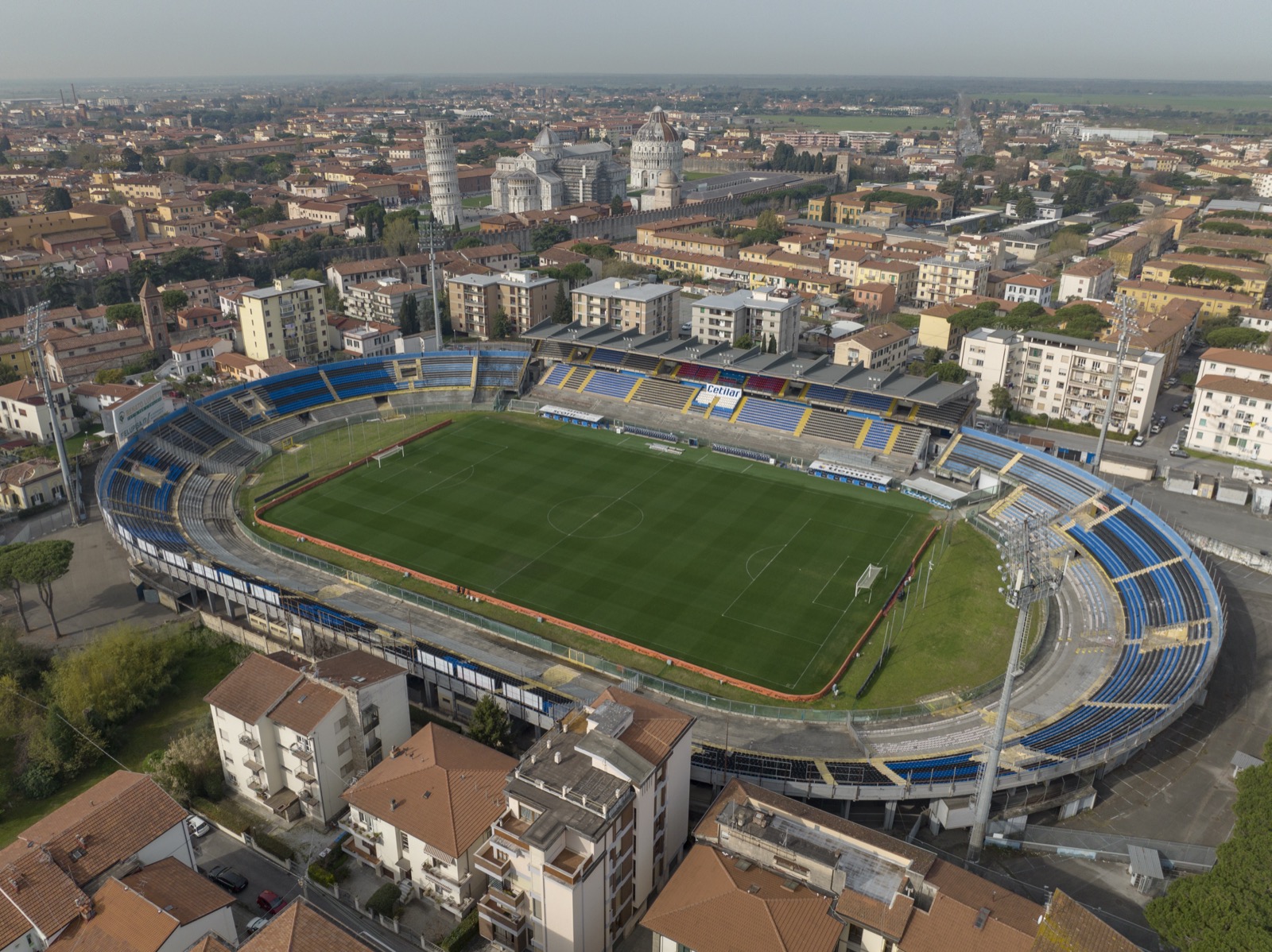
The first matchday is set for 5 September 2026, with the Open Day curtain-raiser of Pisa-Perugia on Friday the 4th at 20:00, at the A. Pagni ground in Peccioli and not in Pisa. The official kick-off time is 15:00 until 22 October, and article 6 allows the league to vary it, including for audiovisual production needs. No source says which clause the earlier kick-off rests on, and it is not the only case: on the opening matchday alone another five games fall outside the standard time, up to Palermo-Pescara on 8 September at 11:00.
The live stream is the second half of the news: one match per group on every matchday on the YouTube channel makes an almost invisible competition observable.
On Napoli the claim of a first does not hold up. That the club is playing Primavera 2 and the UEFA Youth League at the same time is documented at source: UEFA lists it among the clubs of the 2026-27 Youth League, with Inter, Roma and Como. But the league calls it an outright first for a club entered in Primavera 2, and the precedent belongs to that same club: in 2023-24 Napoli finished third in group B with 54 points (Comunicato Ufficiale LNPB n. 158 of 14 May 2024) and in the same season played six games of the Youth League group stage, between 20 September and 12 December 2023. They arrived here by being relegated from Primavera 1 in 2025-26, seventeenth and beaten in the play-outs.
What to watch
The first thing is who occupies the single slot, club by club: an overage goalkeeper is a safety choice, an overage centre-forward a results choice, no overage player on the teamsheet a statement of intent.
The second is the twenty-fifth matchday, when the slot narrows to 2007: whoever has built the season on a more experienced player loses him just as the table starts to bite.
The third is the playing time of the 2008 and 2009 age groups at mid-table clubs. That is where two places freed up across thirty games become a career, or vanish without leaving a trace. In eight months the count can be done, and for the first time watched as well.
Sources: LNPB press release n. 14 of 1 September 2026 for the title sponsor, the Open Day, the YouTube streams, the sixteen regions, the reason for the cut and Napoli in the Youth League. Comunicati Ufficiali LNPB: n. 9 of 30 July 2026, the 2026/2027 rulebook, for article 9, the wording, the play-offs and article 6, which carries the official kick-off times and the rules for moving them but not the dates; n. 4 of 25 July 2025 for the ceiling of three and the forward-looking provision; n. 3 of 8 July 2026 for the entry list and the groups, on which we redid the count of the regions by hand; n. 2 of 1 July 2026 for the dates; n. 17 of 1 September 2026 for the schedule, kick-off times and grounds of the opening matchday; n. 158 of 14 May 2024 for Primavera 2 in 2023-24. UEFA’s match archive and club list for the Youth League. All quotations from these Italian-language documents are our translation. No quotation from an executive accompanies the stated reason. We did not seek a clarification from the league or a disciplinary precedent on the fuori lista clause, nor did we consult the Primavera 1 rulebook for 2026-27.
Frequently asked questions
How many overage players can be fielded in Primavera 2 in 2026-27?
Only one per match. Article 9 of the rulebook, published in Comunicato Ufficiale LNPB n. 9 of 30 July 2026, says that in the group stage a single overage player may be used, that is may take the field, with no age limit whatsoever. In the previous season the ceiling was three, as set out in Comunicato Ufficiale LNPB n. 4 of 25 July 2025.
Who counts as an age-eligible player in Primavera 2 in 2026-27?
A player born not earlier than 1 January 2008 who has in any case turned fifteen, in compliance with article 34 paragraph 3 of the FIGC's Norme Organizzative Interne, the federation's internal rules. The threshold moves by one year every season: in 2025-26 it was 1 January 2007.
Can the overage player be of any age?
It depends on the point of the season, and this is the part most often missed. In the first twenty-four matchdays the single overage player has no age limit at all. In the last six matchdays of the group stage (from the twenty-fifth to the thirtieth), in the play-offs, in the play-outs and in the title match, that player must be born not earlier than 1 January 2007, exactly one year above the age-eligible threshold.
How is the competition structured?
Thirty-two clubs split into two groups of sixteen, thirty matchdays home and away, from 5 September 2026 to 8 May 2027, with Pisa-Perugia brought forward to 4 September for the Open Day. The winners of each group go up to Primavera 1, the clubs from second to fifth place play single-leg play-offs, the fifteenth and sixteenth placed sides play home and away play-outs. If the gap between fifteenth and sixteenth is nine points or more, that group's play-outs are not played and the bottom club is relegated directly. Play-offs and play-outs fall after the group stage, between 15 and 29 May 2027: the dates are in Comunicato Ufficiale LNPB n. 2 of 1 July 2026.
Where can the matches be watched?
The Lega Serie B broadcasts one match per group on every matchday on its own YouTube channel. The first two live games are Pisa-Perugia and Mantova-Sampdoria on the opening matchday, Cremonese-Venezia and Napoli-Catanzaro on the second.
Why has the league cut overage players from three to one?
The league does state the reason, and it sits in press release n. 14 of 1 September 2026: the cut is described as a clear-cut choice, aimed at guaranteeing even more room and playing time to young players, encouraging their growth and their path towards the first team. These are the words of the league as an institution, in our translation from the Italian: the release carries no quotation from any executive, so no individual claims authorship of it. The decision, moreover, does not date from this summer: it was already written as a forward-looking provision inside the rulebook for the 2025-26 season, published on 25 July 2025, giving the clubs a year's notice.
Is it true that Napoli are the first Primavera 2 club to play in the UEFA Youth League?
No, and the precedent belongs to that same club. Press release n. 14 of 1 September 2026 speaks of an outright historic first for a club entered in Primavera 2, but in 2023-24 Napoli were already doing both things at once: in Primavera 2 they finished third in group B with 54 points (Comunicato Ufficiale LNPB n. 158 of 14 May 2024) and in the UEFA Youth League they played six group stage games, from 20 September to 12 December 2023, as recorded in UEFA's match archive. What is verified is this year's participation: UEFA lists Napoli among the clubs of the 2026-27 Youth League, together with Inter, Roma and Como. And verified too is how Napoli got into group B, that is by being relegated from Primavera 1 in 2025-26, finishing seventeenth and losing the play-outs.