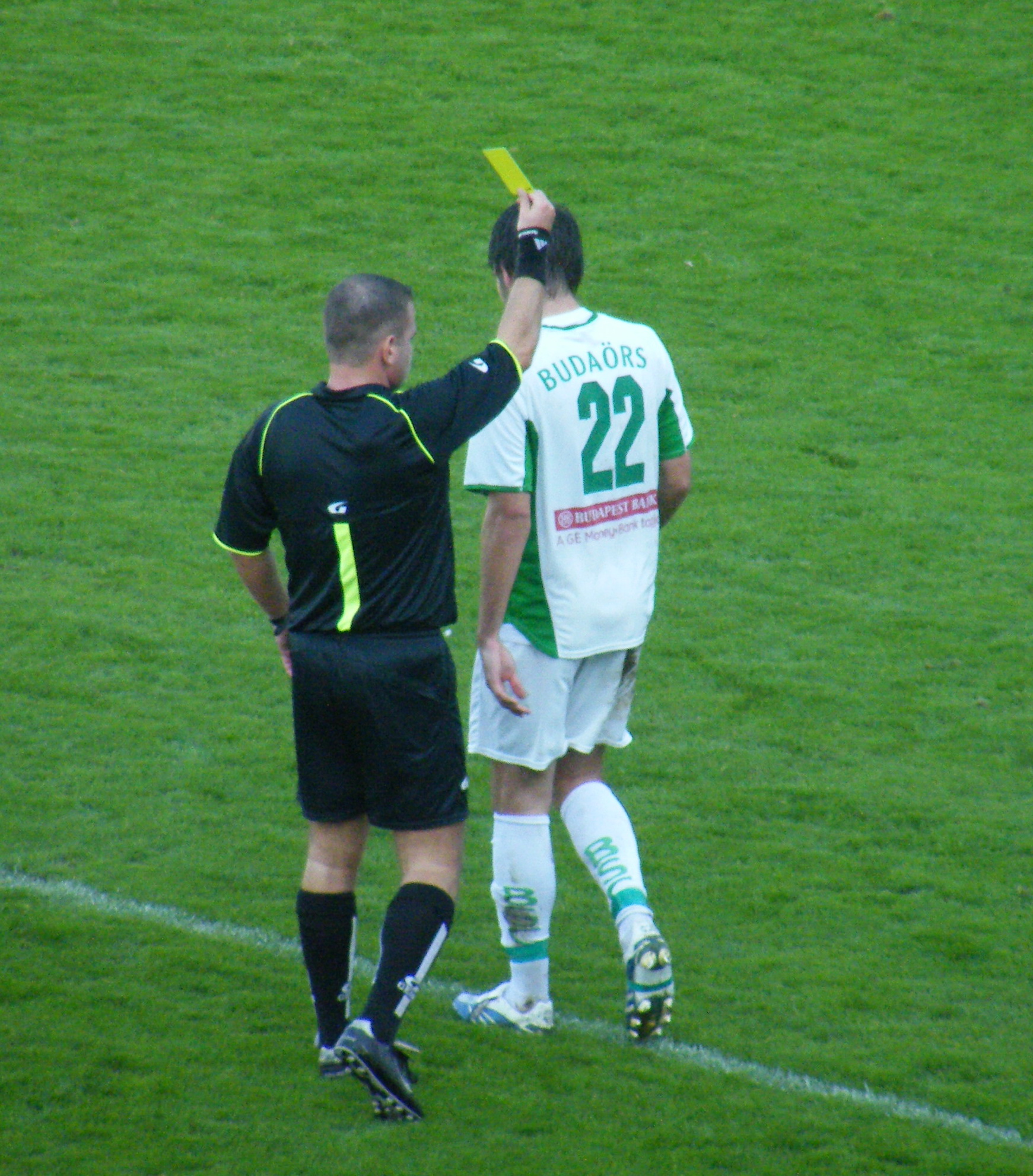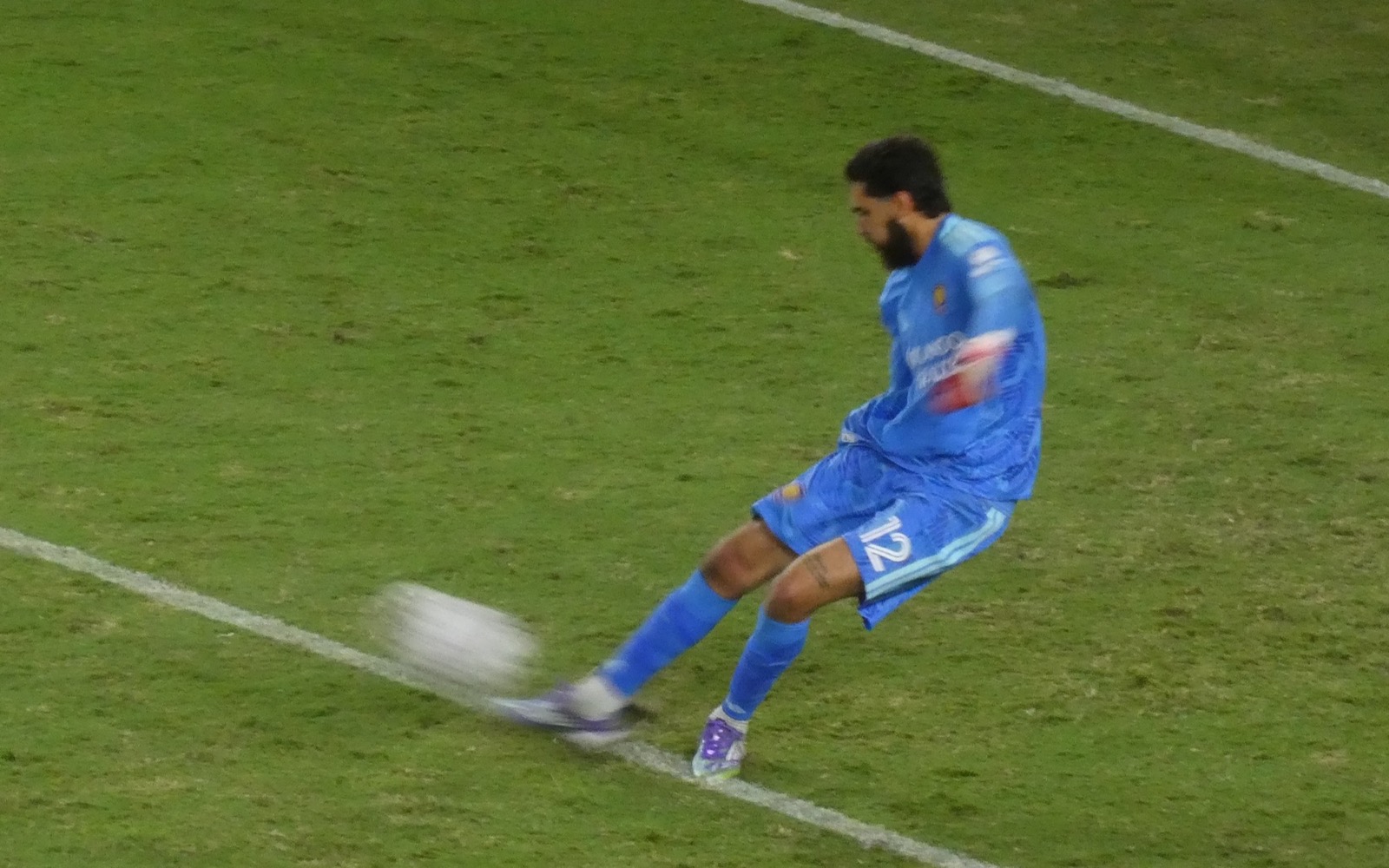
From the 2026/27 season the two most frequent restarts in a football match have a clock hanging over them. Throw-in and goal kick: if the referee judges that time is being wasted, the arm goes up and five seconds are counted. If the ball is not in play when the count ends, the throw-in goes to the opposition and the goal kick becomes a corner. The changes approved by the IFAB have applied since 1 July, were already in use at the World Cup, and will be seen in Serie A from matchday one, on the weekend of 22 and 23 August.
What changes, in order
| Situation | Before | From 2026/27 |
|---|---|---|
| Delayed throw-in | Verbal warning, possible caution | Five-second countdown, then throw-in to the opposition |
| Delayed goal kick | Verbal warning, possible caution | Five-second countdown, then corner to the opposition |
| Goalkeeper holding the ball | Eight seconds, then a corner (since 2025/26) | Unchanged |
| Substitution | No precise limit on leaving the pitch | Ten seconds to leave, otherwise the team plays short |
| Treatment on the pitch | Quick return | One minute of playing time off the field |
| VAR | Previous protocol | Also incorrect second yellow, mistaken identity, wrongly awarded corner |
The precedent that explains everything
In 2025/26 came the rule on the eight seconds a goalkeeper may hold the ball, with the referee signalling the final five seconds by raising an arm and a corner as the sanction. It was a new rule in form but an old one in substance: the time limit already existed, what was missing was a way of enforcing it.
The genuine novelty was the visible count. A limit nobody can see is a limit nobody respects, because the referee’s discretion turns into a negotiation. A raised arm dropping one finger at a time changes behaviour before it ever produces a sanction.
What the IFAB has done now is take that mechanism and apply it to the two restarts that occur dozens of times in a match.
The goal kick becomes a prepared phase
This is where the heaviest tactical consequence sits, and it has nothing to do with time wasting.
For a side that builds short, the goal kick is not a gesture but a structure: the two centre-backs splitting either side of the box, the holding midfielder dropping in or finding space behind the first line of pressure, the full-backs pushing on, the striker pinning the opposition back line. Setting that shape up takes seconds, and until now those seconds were free.
From now on, if the referee judges that things are being dragged out, those seconds carry the most expensive price ever written into the laws for time wasting: a corner against you, statistically the most dangerous situation in football after a penalty.
The sensible response from teams will not be to play faster at random. It will be to arrive at the ball with the shape already taken. Anyone with routines drilled in training loses nothing, because the structure forms while the goalkeeper walks towards the ball. Anyone improvising and looking around to work out where teammates are will discover that five seconds is not much at all.
The throw-in goes back to being a set piece
The throw-in is the most frequent restart of all, and in recent years it has become a coached situation: rehearsed sequences, the tall man coming into the box, the block on the first touch, the short option to the full-back who immediately switches to the weak side.
All of that takes time. The player drying the ball, the one calling teammates over, the one waiting for the centre-forward to arrive from the other side of the pitch: that time now enters the count.
The likely effect is not the disappearance of coached throw-ins but their simplification. The routines that can be triggered with a single gesture will survive, while the ones that need a meeting on the touchline will not. It is also reasonable to expect more quick throws taken while the opposing defence is still disorganised, which is precisely when a throw-in is at its most dangerous.
The closing minutes lose three tools out of four
A side protecting a result in the last ten minutes has always had a well stocked toolbox: painfully slow goal kicks, endless throw-ins, substitutions with the longest possible walk off, and the pause on the ground with the medical staff coming on.
Now three of those four tools carry a cost. The slow goal kick costs a corner, the slow throw-in costs possession, the slow substitution costs a minute of playing time a man down, which in the eighty-eighth minute is an enormous price. Even the fourth has been narrowed: a player treated on the pitch then has to stay off for a minute of playing time, with the exceptions foreseen for goalkeepers and for the most serious collisions.
The calculation for a team leading 1-0 changes accordingly. Slowing the game down is still possible, but it is no longer free, and every gesture that used to cost a verbal warning now carries a tariff.
The real question mark is the threshold
The rule contains one word that decides everything: if the referee judges that the delay is deliberate. No automatic clock starts at every throw-in, an assessment does.
That means consistency of application will be the problem of the opening weeks, as it was with the eight seconds. If one official counts in the twentieth minute and another only in the eighty-fifth, teams quickly learn to read the individual referee rather than the law, and the advantage goes to whoever adapts fastest.
What to watch from matchday one
Three clues will tell us whether the change really bites.
The first is the number of countdowns actually started in the opening rounds. If they stay very rare, the rule will have worked as a deterrent and will almost never appear on a team sheet.
The second is where the players are standing the moment the goalkeeper puts the ball down in the goal area. If the team is already arranged, the coach has worked on the change.
The third is the minute at which leading teams make their first substitutions. With ten seconds to leave the pitch and a minute of penalty for those who do not, the tactical change late in a game becomes a more delicate decision than it has ever been.
Sources: official IFAB communications on the Laws of the Game 2026/27, federation and refereeing communications, national and international sports press. The reading of the tactical consequences is our own analysis.
Frequently asked questions
What does the new five-second rule say?
If the referee judges that a throw-in or a goal kick is being deliberately delayed, they start a five-second visual countdown with a raised arm. If the ball is not in play when the count ends, the throw-in is awarded to the opposing team and a delayed goal kick becomes a corner for the opposition.
When does it come into force?
The changes approved by the IFAB apply from 1 July 2026 and were already in use at the 2026 World Cup. In Serie A they take effect from matchday one, on the weekend of 22 and 23 August.
What changes for substitutions?
The player being replaced has ten seconds to leave the pitch from the moment the board is shown or the referee signals. If they do not, the team is temporarily a man down: the substitution cannot be completed until play has been stopped after at least one minute of playing time.
Does this rule build on something earlier?
Yes, on the eight-second goalkeeper rule introduced in 2025/26, with the referee signalling the last five seconds by raising an arm and a corner as the sanction. The principle of a visible countdown is now extended to two further restarts.
What can the VAR review now?
Three additional cases: a red card from a clearly incorrect second yellow, mistaken identity when the card goes to the wrong player, and a clearly incorrectly awarded corner kick.