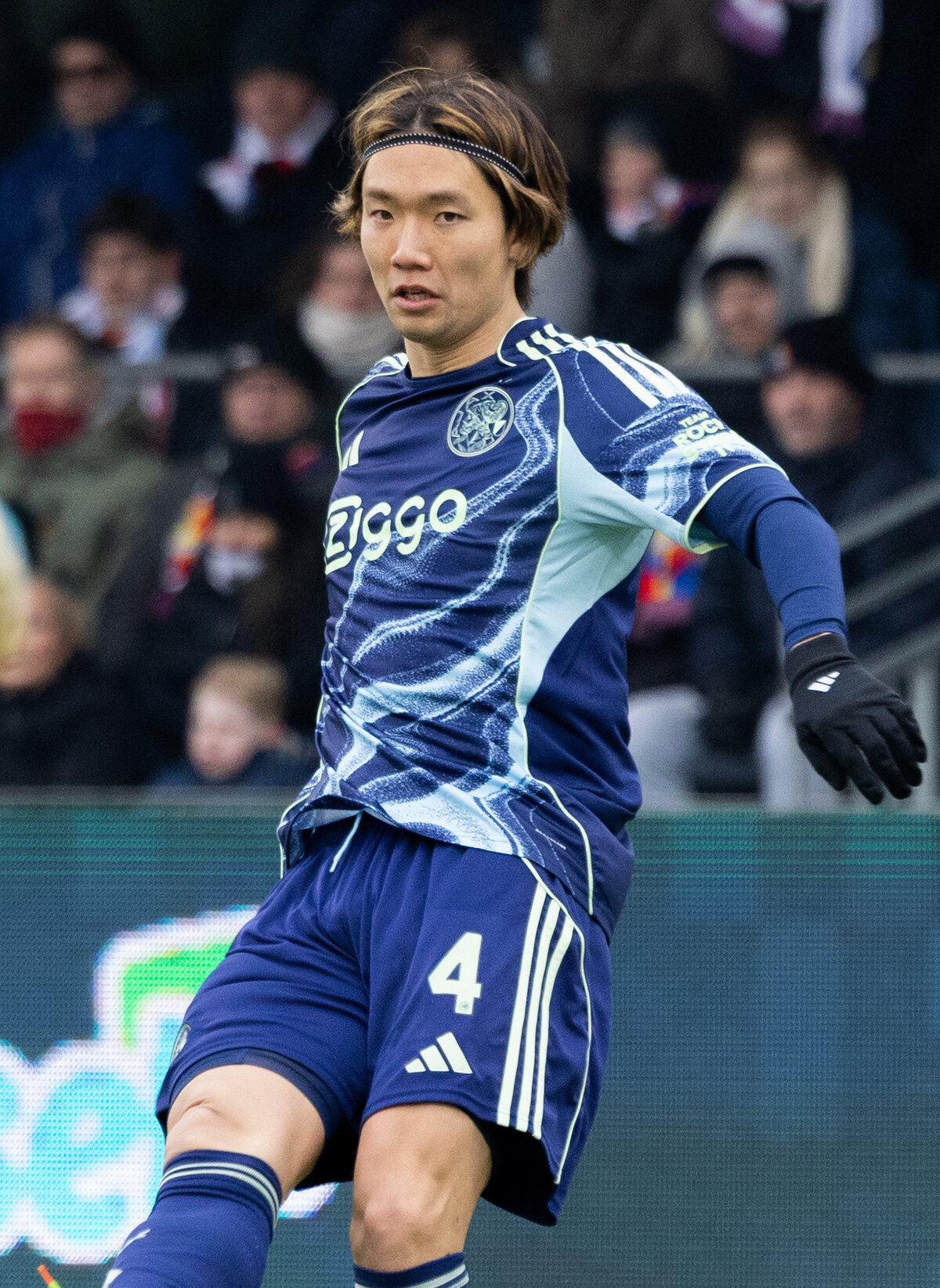
Borussia Mönchengladbach announced the return of Ko Itakura on 20 August, exactly one year after selling him to Ajax. He has a contract until 2030, the number 6 shirt, and a fee that German media put at up to around 4 million euros including add-ons, with a sell-on percentage going to the Dutch club. In the summer of 2025 Gladbach had sold him for a reported 10.5 million guaranteed.
The deal at a glance
| Item | Detail |
|---|---|
| Player | Ko Itakura |
| Born | 27 January 1997 (29) |
| Position | Centre-back, defensive midfielder when needed |
| Height | 1.88 m |
| From | Ajax |
| To | Borussia Mönchengladbach |
| Contract | Until 2030, number 6 shirt |
| Reported fee | Up to around 4 million with add-ons |
| International | Japan, 42 caps and 2 goals, captain |
One year that cost six million in value
The obvious reading is the financial one, and it is worth doing first because it is the part that jumps out. In the summer of 2025 Gladbach sold Itakura to Ajax for a reported 10.5 million euros guaranteed. Twelve months later they are taking him back for a sum German sources place at up to around 4 million with add-ons.
This is not clever dealing by the German club: it is how the market normally works when a player does not play. In the Netherlands Itakura managed 18 Eredivisie appearances, barely more than half a season. A twenty-nine-year-old centre-back who plays that little across a full campaign loses value quickly, and his club is left with a long contract and an asset that returns nothing.
Ajax chose to recover cash while accepting a heavy book loss and keeping a sell-on percentage, which is how clubs try to leave a door open when they sell at a discount.
The defender coming back to the Bundesliga
Itakura is not just any centre-back picked up out of necessity. He is the captain of the Japan national team, a role he also held at the 2026 World Cup, with 42 caps and 2 goals at senior level.
His European path started in the Netherlands at Groningen, continued with a season at Schalke 04 on loan from Manchester City, 31 appearances and promotion to the Bundesliga in 2021-22, and went on at Gladbach from 2022 to 2025, roughly eighty games across all competitions according to the Bundesliga’s own count.
On the pitch he is a 1.88 metre right-sided centre-back who can step from a back four into a back three and who has, when required, played in front of the defence. That flexibility is worth more to a mid-table club than an extra centimetre in the air, because it allows a change of shape without a change of personnel.
The hole Elvedi left
The real reason for the return has a name: Nico Elvedi. The Swiss defender left Mönchengladbach after eleven years and 318 Bundesliga appearances to join Leeds United, for a fee reported at around 10 million euros plus a sell-on percentage for the German club.
Losing a player with that many games is not a quality problem, it is a knowledge problem. Eleven years in the same defence means habits that do not transfer with the registration: whoever arrives has to learn them, and learning them costs points in the opening weeks.
Bringing back a centre-back who already knew that defence is the cheapest answer available. Not the best answer in absolute terms, because Itakura arrives from a season as a squad player, but the fastest one.
What this deal says
Sporting director Schröder explained the signing in plain terms: the club was looking for experience and quality, and found both. Itakura said he was happy to be back, that he had missed the club and that he decided as soon as the offer came.
Those are standard lines, but the structure of the deal makes them more believable than usual. A player who agrees to go back where he has already been, after a bad year, almost always does it for reasons that have nothing to do with the contract: the feeling of being somewhere he already knows how things work, and the certainty of playing.
For Gladbach, who have collected several difficult seasons lately, taking an international centre-back at a quarter of the price they sold him for is a defensible piece of accounting. What remains to be checked on the pitch is whether the year in Amsterdam left marks on his match rhythm. No reported fee can answer that in advance.
Data and information gathered from public sources: Borussia Mönchengladbach’s official announcement of 20 August 2026 as carried by Bundesliga.com, German specialist media, public statistical and biographical archives. Transfer figures are those reported by the press and should be read as indications.
Frequently asked questions
When was Itakura's return to Gladbach confirmed?
On 20 August 2026. The Japan defender signed a contract until 2030 and will wear the number 6 shirt, one year after joining Ajax.
How much did the return cost?
German sources report a fee that can rise to around 4 million euros including add-ons, with a sell-on percentage for Ajax. Those are press figures: neither club published the financial detail.
Who is Ko Itakura?
A Japanese centre-back born on 27 January 1997, standing 1.88 metres, also able to play in front of the defence. He captains the Japan national team, with 42 caps and 2 goals, and wore the armband at the 2026 World Cup.
Why did Gladbach bring him back?
Because they lost Nico Elvedi to Leeds United after eleven years and more than three hundred Bundesliga appearances. They needed a centre-back already used to the German league, and Itakura fitted by definition: he played for Gladbach from 2022 to 2025.
How did his Ajax spell go?
Sparingly: 18 Eredivisie appearances in 2025-26, a long way from regular starter numbers. That is why his market value dropped and why the buy-back was affordable for Gladbach.