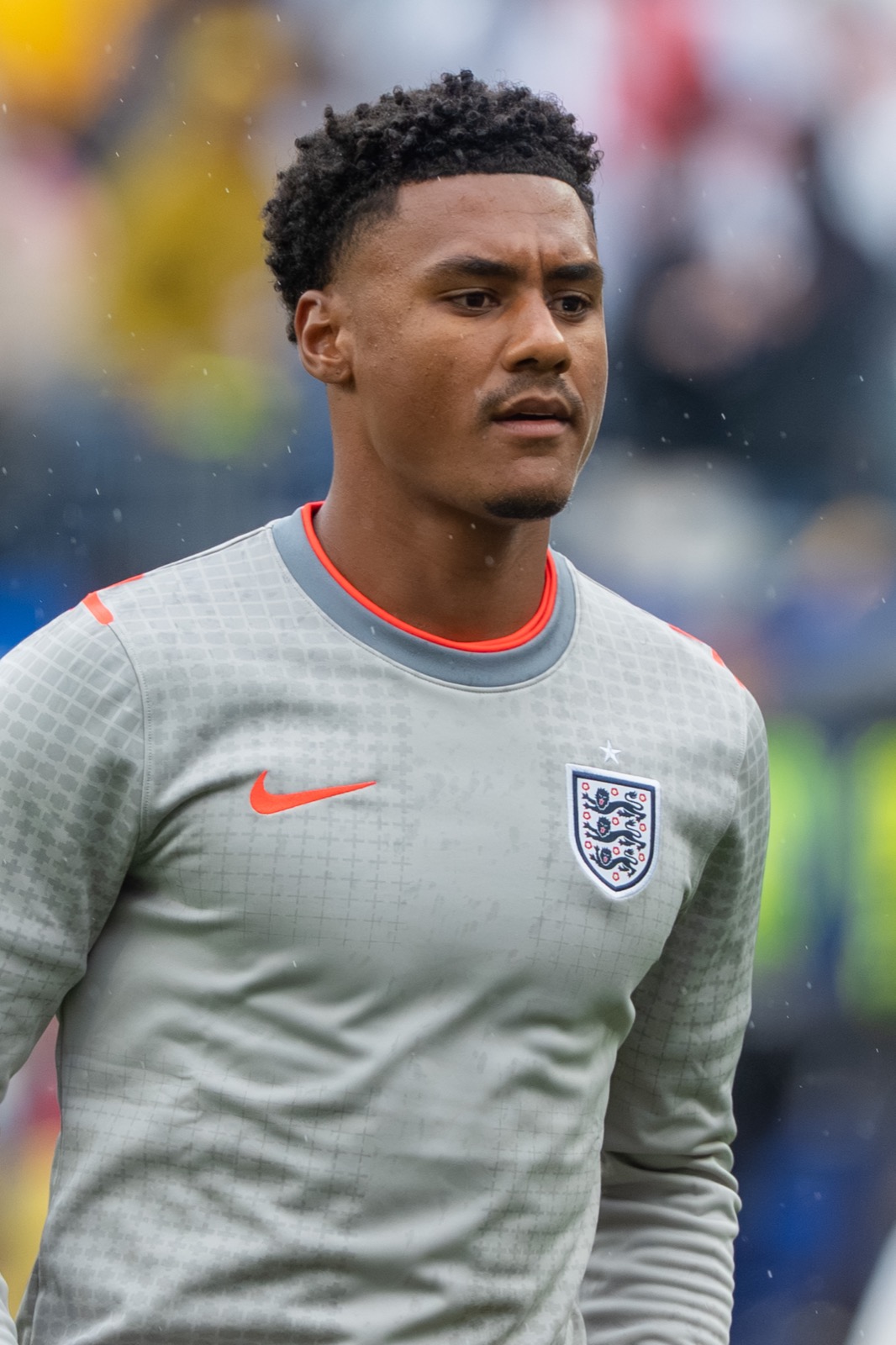
Al-Hilal announced Ollie Watkins on 30 August 2026, with a three-year contract and the signing ceremony already held that same evening at the Almajdiah Sport Hub. The Riyadh club’s statement contains no fee, no shirt number and no quotes. What it does contain, without saying so, is the real theme of the deal: two markets that do not close on the same day, and five days of gap in between.
The deal at a glance
| Item | Detail |
|---|---|
| Player | Ollie Watkins, 30, born on 30 December 1995 in Torquay |
| Position | Centre forward, described as “English striker” in the statement |
| From | Aston Villa |
| To | Al-Hilal SFC, Riyadh |
| Date | 30 August 2026, signing ceremony that same evening |
| Contract | Three years, with no expiry date given in the statement |
| Declared fee | None |
| Shirt | 11, the same one he wore at Villa |
| English deadline | Tuesday 1 September 2026, 23:00 BST |
| Saudi deadline | 6 September 2026 |
The statement says three years and does not say a price
The official text is spare. Al-Hilal’s board of directors, chaired by Prince Nawaf bin Saad, has finalised the signing of the English striker from Aston Villa to represent the first team for three years. The ceremony, the club writes, took place that same Sunday evening at the Almajdiah Sport Hub, and the player was expected in training ahead of the match against Al-Ahli the following Tuesday.
The verb is in the past tense and the deal is presented as done: no negotiation in progress, no agreement in principle, no medical still to be taken. What the statement does not say has to be stated with the same precision, because it is the part usually attributed to clubs out of habit: no amount, no expiry date, no shirt number, no quoted words.
The figures in circulation therefore remain press reconstructions. On 28 August the BBC wrote of a 51 million pound transfer still to be completed, on the 29th David Ornstein led on a 50 million deal being finalised, on the 30th the Express and Star spoke of around 51 million. On the English side the amount does not appear to have been made public, and the undisclosed-fee formula reaches us indirectly, from an encyclopaedic entry citing Villa’s farewell statement: we have not read that text in the original, and we write this because the difference matters.
Five days of gap: what they actually produce
The two dates are these. The Premier League window opened on Monday 15 June 2026 and closes on Tuesday 1 September at 23:00 BST: it is the Premier League that says so on its own website. The Roshn Saudi League window opened on 22 July and runs until 6 September, according to the announcement issued by the Saudi football federation on its official channel and picked up on 4 June by the local sports press. On this second date the source is a single one and it is not a federation document that can be consulted: we report it as a federation announcement, not as an act read in the original.
There are five days between the two deadlines, and the way they are usually described is wrong. They do not produce an advantage for the buying Saudi club, which after 6 September is as stuck as everybody else. They produce a window in which the selling English club can no longer buy. From 2 to 6 September a Premier League side that receives an offer from Riyadh can only say yes or no to a straight sale: it takes the money, is left one player short, and will be able to spend that money only in January.
But that is not what happened here
The Watkins case is useful precisely because it contradicts the pattern. Aston Villa did not end up inside that uncovered window: they sold their centre forward on 30 August, two days before their own deadline, and had already brought in the replacement. Nicolas Jackson arrived from Chelsea on 28 August, two days earlier still, and the BBC explicitly called him the replacement, writing that the club was working to register him in time for Monday’s match against Arsenal. To write that Villa did not have the time to replace Watkins would be false. On Jackson’s fee, moreover, the sources diverge and never settle the matter: 47.5 million pounds according to the encyclopaedic tables, 65 million according to the BBC. Neither should be presented as the price paid.
The leverage did not belong to the buying club: it belonged to the player
If the gap between the windows did not give power to Al-Hilal, who did it give it to? To the player. Watkins knew that his exit door stayed open five days longer than his club’s entrance door, and he used the one thing a footballer really controls: his own availability. He refused to play on the opening weekend of the season.
Aston Villa went to the Falmer Stadium on 23 August and lost 4-0 to Brighton and Hove Albion: Lindelof’s own goal in the 8th minute, De Cuyper in the 18th, Hinshelwood’s double in the 30th and the 31st, Joao Gomes sent off in the 40th. The encyclopaedic account adds that the other two forwards, Tammy Abraham and Brian Madjo, were injured and that Villa took the field without a recognised centre forward: that detail, however, does not appear in the BBC article cited as the source, so it remains second-hand material. What is beyond dispute is that Watkins made himself unavailable, and that up to 23 August he had zero appearances for the season.
Emery, in his press conference, told the end of the story: “He told us after the Brighton match he was sorry and that he had made a mistake. He was wrong, but we accepted it. The players as well”. Asymmetric time is the lever, unavailability is the way of pulling on it.
The counter-move: reversing the order of operations
The club’s answer was not to hold on to the player, which was the losing move. It was to change the order of the factors: the replacement first on 28 August, then the sale on the 30th, with forty-eight hours of margin before their own deadline. A club that knows the calendar does not try to win the tug of war, it puts itself in a position to lose it without damage. Emery said it almost in those very words: “But now it’s a new chapter here with Nicolas Jackson.”
The context explains why Villa were equipped for it. The summer of 2026 was a campaign of heavy sales: Morgan Rogers to Chelsea on 21 July, Ezri Konsa to Arsenal, Emiliano Martinez to Chelsea on 30 August, Watkins on the same day. Coming in, Zion Suzuki from Parma for 30 million on 19 August, Leon Goretzka on a free on the 27th, Jackson on the 28th. On the reasons Emery did not mince his words: “We took decisions because it’s good for the club”. And on the market in general: “Of course, we don’t want to be a club that sells players, but the responsibility is there. It’s crazy [money for someone] 30 years old and £50m for Ezri Konsa [who is 28].” The square brackets belong to the BBC, who transcribed the sentence, not to the speaker.
In among it all, the farewell: “He’s a fantastic guy - a fantastic guy even more than a player. I told him ‘bye’ with a huge hug and with small tears.”
What Aston Villa is letting go
The numbers explain why the tug of war was so tense. Watkins finishes with 278 appearances and 108 goals in all competitions for Villa, of which 221 appearances and 91 goals in the Premier League: he is the club’s all-time leading scorer in the top flight, having passed Gabriel Agbonlahor’s 74 with his 75th on 10 May 2025, in the 1-0 away at Bournemouth. Goal number 100 came on 16 April 2026, in the 4-0 against Bologna in the Europa League quarter-finals, which also made him Villa’s all-time leading scorer in European competition.
His last season had been his best for volume: 55 appearances and 21 goals, of which 37 and 16 in the league and 15 and 5 in the Europa League, the side’s top scorer for the season. In 2023/24 he registered 13 assists in the Premier League, the most in the division, which earned him the Playmaker of the Season award, and 19 goals from open play in a single season, level with Christian Benteke in 2012/13. From November 2025 he was vice-captain, behind John McGinn and Ezri Konsa.
Before that there had been 78 appearances and 26 goals at Exeter City and 143 appearances and 49 goals at Brentford between 2017 and 2020, with the Championship player of the season award in 2019/20. He had joined Villa on 9 September 2020 for 28 million pounds with bonuses up to 33, a club record at the time, and his contract ran until 30 June 2028: he leaves with two seasons still ahead of him. With England he has 24 caps and 7 goals, a final at Euro 2024 and third place at the 2026 World Cup.
On the other side there is a second constraint: eight out of ten
Simone Inzaghi’s Al-Hilal are not simply adding a forward to the list. In the Roshn Saudi League each club can register ten foreign players, eight of any age plus two aged 21 or under, but for each league match it can name only eight of them. The squad already contains Karim Benzema, Yassine Bounou, Kalidou Koulibaly, Theo Hernandez, Ruben Neves, Sergej Milinkovic-Savic, Crysencio Summerville and Gabriel Martinelli: adding Watkins is not an addition, it is a choice that leaves somebody else out every matchday. This too is a calendar that turns into a tactical constraint, seen from the other side.
The league, for that matter, had already been under way for seventeen days: the 18-team season started on 13 August. At the update of 22 August Al-Hilal had three wins from three with 12 goals scored and 3 conceded, behind Al-Nassr on four from four, and on 28 August they played the fourth matchday away at Al-Khaleej, scoring five goals. On their position in the table the public sources contradict one another, so we are not writing it.
What to watch over the next six days
The calendar packs everything into a few hours. On Monday 31 August at 20:00 BST Aston Villa play the second matchday against Arsenal at Villa Park, moved from the 29th for television, and it is the first match of the post-Watkins era. On Tuesday 1 September Al-Hilal face Al-Ahli, and it is the first available occasion for the new number 11 to make his debut: the statement refers to “next Tuesday” without giving the date, which can be worked out from the fixture list. That same evening, at 23:00 BST, the English window closes. On Saturday 5 September Villa play at Hull, and on Sunday the 6th the Saudi window closes.
There remains the detail that closes the circle better than any comment: Watkins wore the 11 in Birmingham and takes the 11 in Riyadh, while Aston Villa’s 11 has ended up on the back of the man who arrived two days earlier to replace him. The thing to watch is not who won the tug of war, but the lesson in method: when two markets close on different days, the club that moves first is not buying a player, it is buying time.
Sources: official statement from Al-Hilal SFC of 30 August 2026 and the official squad page; premierleague.com for the dates of the English window; the announcement from the Saudi football federation picked up by the local sports press for the Saudi window; BBC Sport of 28 August 2026 for Unai Emery’s quotes; encyclopaedic entries and public archives for statistics and fixtures. Neither club has communicated an amount: the figures cited are journalistic reconstructions.
Frequently asked questions
How much did Ollie Watkins cost Al-Hilal?
Al-Hilal's official statement of 30 August 2026 gives no amount, in any form. The figures in circulation are press reconstructions and are not confirmed by either club: on 28 August the BBC wrote of a 51 million pound transfer still to be completed, on 29 August David Ornstein led on a 50 million deal, and on 30 August the Express and Star spoke of around 51 million. They are to be read for what they are, unconfirmed press speculation.
When do the English and Saudi transfer windows close in the summer of 2026?
The Premier League window opened on Monday 15 June 2026 and closes on Tuesday 1 September 2026 at 23:00 BST: the Premier League says so on its own website. The Roshn Saudi League window opened on 22 July and closes on 6 September 2026, according to the announcement published by the Saudi football federation on its official channel and picked up by the local sports press. There are five days between the two deadlines.
Was Aston Villa left without time to replace Watkins?
No, and this is the point that turns the most common reading upside down. Watkins was sold on 30 August, two days before the English deadline, and the replacement had already arrived: Nicolas Jackson from Chelsea on 28 August, whom the BBC explicitly describe as the replacement. Villa bought first and sold afterwards.
Why did Watkins not play on the opening weekend of the Premier League?
He made himself unavailable in order to force the move to Saudi Arabia. Aston Villa lost 4-0 away to Brighton on 23 August 2026, at the Falmer Stadium, with Lindelof's own goal in the 8th minute, De Cuyper's goal in the 18th, Hinshelwood's double in the 30th and the 31st and Joao Gomes sent off in the 40th. Unai Emery later said that the player had apologised after the match and admitted his mistake.
What shirt number does Watkins have at Al-Hilal?
Number 11, the same one he wore at Aston Villa. The number does not appear in the press release: it is on Al-Hilal's official squad page, under the Forwards heading. The 11 was free because Kaio Cesar, who had it, is out on loan at another club. On the English side Villa's 11 is listed as assigned to Nicolas Jackson, according to the 2026/27 squad reported by encyclopaedic sources.
What numbers does Watkins leave behind at Aston Villa?
278 appearances and 108 goals in all competitions, of which 221 appearances and 91 goals in the Premier League: he is the club's all-time leading scorer in the top flight, having passed Gabriel Agbonlahor's 74 goals. In 2025/26 he finished with 55 appearances and 21 goals, the side's top scorer for the season, and with the Europa League title, the only club trophy of his career.