The World Cup final was played on 19 July. The Coppa Italia round of 64 is set for 16 August. That leaves twenty-eight days, and inside those twenty-eight days a coach has to rest his internationals, get them back into shape and install a season. All of it cannot be done. The interesting part is what gets done first.
The calendar doing the squeezing
| Date | Event |
|---|---|
| 11 June 2026 | World Cup begins, 48 teams and 104 matches |
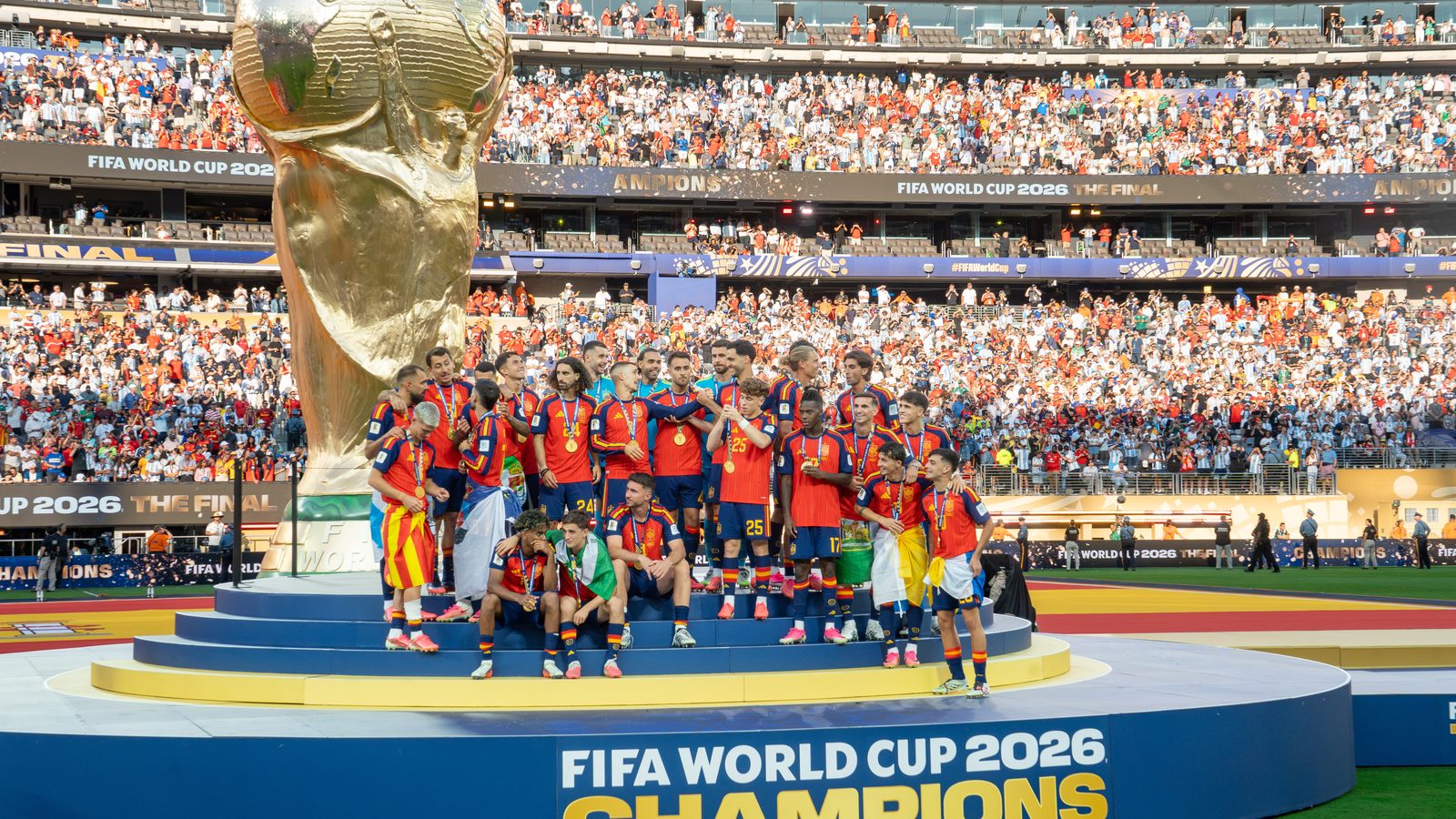
| 19 July 2026 | Final at MetLife Stadium, Spain 1-0 Argentina after extra time |
| 9 August 2026 | Coppa Italia preliminary round |
| 16 August 2026 | Coppa Italia round of 64 |
| 22 and 23 August 2026 | Opening round of Serie A |
| 27 September 2026 | First international break |
Anyone who went the distance played eight matches in a little over five weeks, and in the final played two matches in one: ninety minutes plus extra time, with Ferran Torres’ decisive goal arriving in the 106th minute. Those players need real rest, not symbolic rest. Take three weeks and they report back in late August, with the league starting days later.
The hidden cost is not fitness, it is repetition
The common mistake is to assume the problem is purely physical. Fitness comes back: a professional who played into July has a base that reactivates quickly, and conditioning staff know how to manage staggered returns.
The real problem is something else, and it concerns a team’s collective memory.
Some things are learned individually and some exist only if eleven players do them together at the same instant. A defender can learn on his own where to stand on a cross. No defender can learn on his own when the line steps up: that movement depends on what the pressing forward is doing thirty metres ahead, and it is built only by repeating it on the pitch with that particular teammate.
Coordinated pressing belongs entirely to the second category. It requires the first man to jump on a precise trigger, the second to cover the right passing lane, the back line to compress accordingly. If one of the three has missed the sessions, the mechanism is not imperfect: it is absent, and the team splits into two blocks with twenty-five metres of open grass in between.
That is why August produces so many sides defending deeper than they will in winter. It is not tactical caution, it is the arithmetic of sessions done together.
What gets installed first
In a compressed window a coach orders the work by installation cost, not by theoretical importance.
First come individual and unit principles: line height, marking references, who follows and who holds. These are rules a late returnee can absorb in two sessions because they concern his own job, not synchronisation with others.
Second comes the build-up structure, which can be simplified without being betrayed. A 3+2 shape in possession can be explained on a board and rehearsed at low tempo: who drops, who widens, where the ball goes if the first press arrives on the goalkeeper.
Last come the mechanisms that need time and legs together: coordinated high pressing, structured attacking transitions, immediate counter-pressing. They are also the most profitable, which is why so many teams look like a different side between October and November.
Why set pieces win in August
One part of the game escapes that hierarchy, and it is the reason the set piece specialist role has grown so much in recent years.
A corner routine can be rehearsed at reduced speed, does not drain the squad, does not depend on collective fitness and works with an incomplete group: the blocks, the timing of the runs, the zones to attack are all learned cold. It is the only area where a month of work delivers a full and immediate competitive edge.
In a season starting like this one, whoever has invested there holds a real margin in the opening rounds. That is not a detail for enthusiasts: it is the line item with the best ratio between time spent and points produced in August and September.
The two speed squad
Then there is a squad management problem that is tactical before it is human.
A group that reported on 7 July and one that reports on 5 August are not two workloads: they are two different teams inside the same squad. The players who did the full preseason know the new movements and have the legs to sustain them. The ones arriving from the World Cup have more quality and less of everything else.
A coach who mixes them immediately risks making the system look broken when it is merely incomplete. One who keeps them separate too long carries the problem into the autumn. In practice almost everyone picks a middle route: World Cup returnees introduced during matches, with clear individual jobs and no responsibility for collective mechanisms they have not rehearsed.
How to read the opening rounds
The consequence for viewers is the most useful part of all this.
The first three or four rounds of a season like this mostly measure one thing: who arrived readiest. That is real information but thin information, because it rewards squads less involved in the World Cup and teams with less new work to install, not necessarily the best built ones.
The first moment the league says something reliable is after the late September break, once the returns have been absorbed and the collective mechanisms have had their weeks. Until then it pays to watch the principles a team is trying to put on the pitch rather than the points it collects. August tables describe the calendar, not the teams.
Sources: official Lega Serie A and Coppa Italia dates for the 2026-27 season, the match report and coverage of the 2026 World Cup final, public archives. The observations on preparation work are analytical and do not report any club’s internal programmes.
Frequently asked questions
How many days are there between the 2026 World Cup final and the start of the Italian season?
The final was played on 19 July 2026. The Coppa Italia round of 64 is scheduled for 16 August, twenty-eight days later, while the opening round of Serie A falls on the weekend of 22 and 23 August.
How many matches did the finalists play?
Eight. The 2026 tournament, the first with 48 teams and 104 matches, opened on 11 June and closed on 19 July: three group games plus five knockout rounds for the sides that reached the final, which went to extra time in East Rutherford.
What can a coach install in a single month?
Simple, repeatable principles: the height of the defensive line, marking references, the build-up structure, set pieces. What is far harder is bedding in coordinated pressing, which needs both physical conditioning and weeks of repetition with the same group on the pitch.
Why do set pieces matter more at the start of the season?
Because they offer the best ratio between training time required and output delivered. They do not depend on collective fitness or on mechanisms built over months, and they can be rehearsed with an incomplete squad.
Are September results reliable?
Less than usual. In a season that starts with squads running at different speeds, the opening rounds mostly measure who arrived readiest, not who is best built. The real picture tends to form after the first international break.