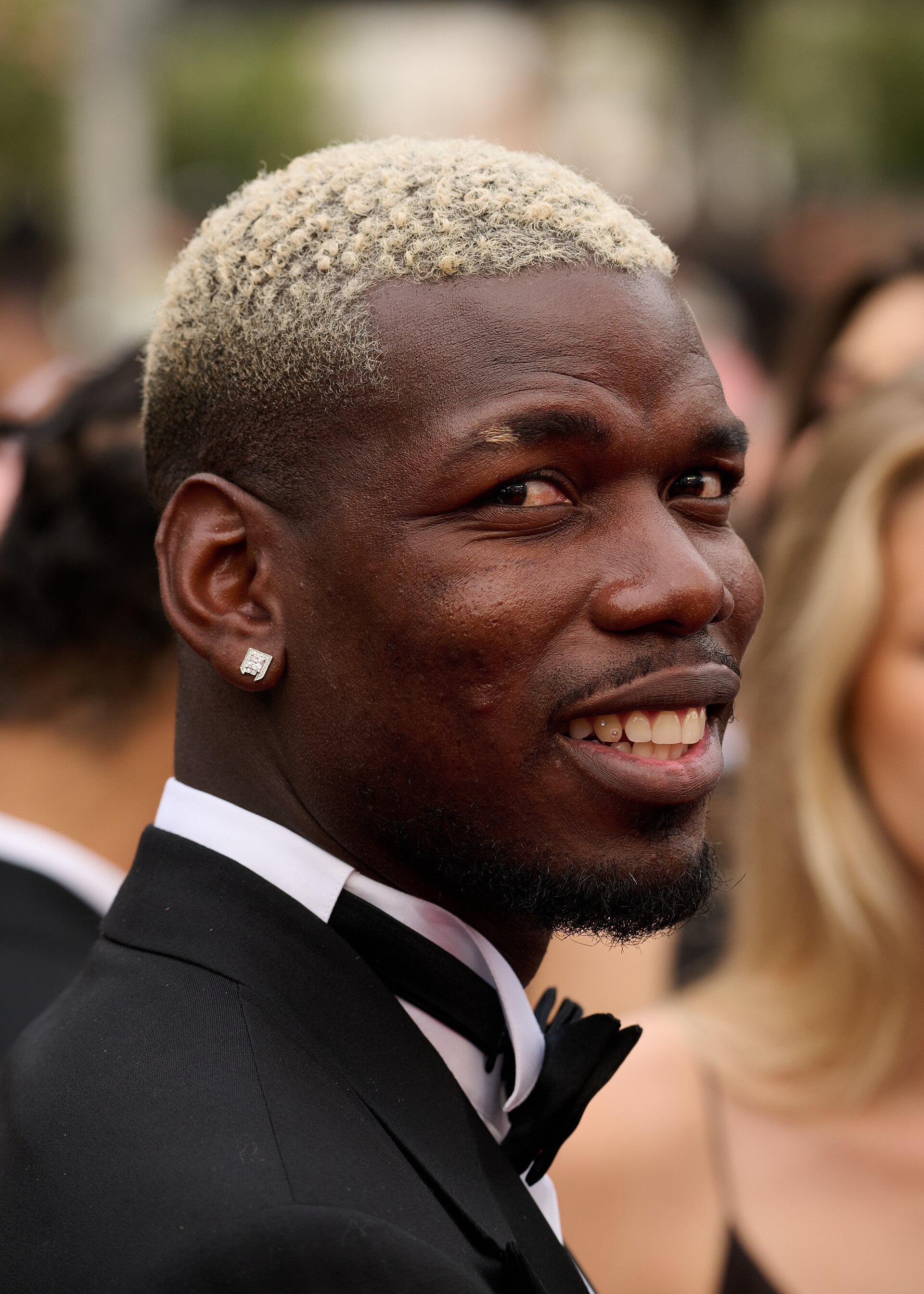
Monaco have terminated Paul Pogba’s contract by mutual consent. The season just finished left him six Ligue 1 appearances, only one as a starter, for a total of 115 minutes. The club’s statement speaks of objectives only partly met, a dry formula for a separation decided before the new campaign’s first competitive fixture. At 33, Pogba is a free agent. The case is worth looking at not as transfer news but as an example of something football explains badly: why coming back, after a long absence, is harder than it looks.
The last four years, counted
| Item | Detail |
|---|---|
| Player | Paul Pogba |
| Born | 15 March 1993 (33) |
| Position | Central midfielder |
| Height | 1.91 m |
| Last season as a leading figure | 2021-22, Manchester United |
| Juventus, second spell | 2022-2024, few appearances |
| Ban | eighteen months, ended March 2025 |
| Monaco | 2025-26, 6 appearances and 115 minutes |
| France | 91 caps, 11 goals, 2018 world champion |
Time does not pass the same way for everyone
A player who is out for a year does not go back a year. He goes back further, and the reason is mechanical before it is psychological.
A professional footballer’s condition is not a level, it is a tolerance. What matters is not being fit on Tuesday: it is coping with Saturday’s game, Wednesday’s game and the following Sunday’s, and repeating it for eight months. That tolerance is built only by playing, because training reproduces intensity but not frequency, nor the unpredictability of contact.
Anyone who stops for a long time loses that threshold first. And this is where a self-closing cycle begins: you come back, you play twenty minutes, a muscle gives way because it was not used to that load, you are out for another three weeks, and the threshold drops again. Every setback does not return you to the starting point, it lowers it.
In Pogba’s case that cycle is documented by the numbers and by their shape. Six appearances and 115 minutes are not the profile of a player who has performed poorly: they are the profile of a player who was available intermittently, in fragments too short for any one of them to build the next.
What Monaco were after, and why it was reasonable
The deal done in the summer of 2025 is worth defending, because it was not eccentric.
Monaco are historically a club that buys profiles carrying a margin of risk, and a world champion midfielder becoming available on a free was an investment with limited financial exposure and very high upside. Had it worked even halfway, it would have been one of the moves of the season.
The problem is that the risk was not distributed the way it seemed. It was not the risk of “he will produce less than before”, which you accept willingly. It was the risk of “he will never get on the pitch long enough to be judged”, which is a different risk and one you cannot offset with a deep bench.
What he can still be
There is a lazy reading to avoid, the one according to which a 33-year-old with these problems is finished. It is not true as a general rule, and there are enough counterexamples to make any verdict premature.
What can be said more solidly is that the kind of team he needs has changed. A midfielder who cannot tolerate weekly frequency cannot be at a club playing three competitions: he can be in a league where matches come once a week, where the tempo is lower and where the calendar forgives. It is no accident that the contacts reported by the press come from Major League Soccer and Saudi Arabia.
The condition, though, is the same regardless of the league: he needs a full season without interruptions, and it is four years since he had one.
The lesson, beyond the case
The best way to read this story is not as the end of a career, but as a reminder of how we assess comebacks.
When a player returns after months out, the question you always hear is “is he back to his old self?”. It is the wrong question, because it puts technical quality at the centre, and technical quality is the last thing to go. The touch remains, the vision remains, the foot remains.
The right question is a different, more prosaic one: how many consecutive matches can he play? That is the figure that decides whether a return actually exists or remains the announcement of a return. In Pogba’s case, across a whole season, the answer was one hundred and fifteen minutes.
Sources: official club communications, international news agencies, public career statistics archives.
Frequently asked questions
Why has Paul Pogba left Monaco?
On 19 August 2026 the club announced the mutual termination of his contract, which was due to run until June 2027, explaining that the objectives set when he arrived had only been partly met. Pogba is now a free agent.
How much did Pogba play for Monaco?
Six Ligue 1 appearances in the 2025-26 season, only one of them as a starter, against Metz, for a total of 115 minutes.
How long has it been since Pogba played regularly?
His last season as a leading figure dates back to April 2022 with Manchester United. Since then there has been a second spell at Juventus, closed with a handful of appearances, an eighteen-month ban that ended in March 2025, and the Monaco season.
Why is a return after a long absence so difficult?
Because football does not only ask you to be fit, it asks you to tolerate repeated loads. The capacity to handle three matches in eight days is built by playing, and someone who has spent months out enters a cycle in which every setback pushes that threshold further away.
How old is Pogba and where could he go?
He turned 33 in March 2026. According to the international press there have been contacts from Major League Soccer and Saudi Pro League clubs, but his recent physical problems weigh on any negotiation.