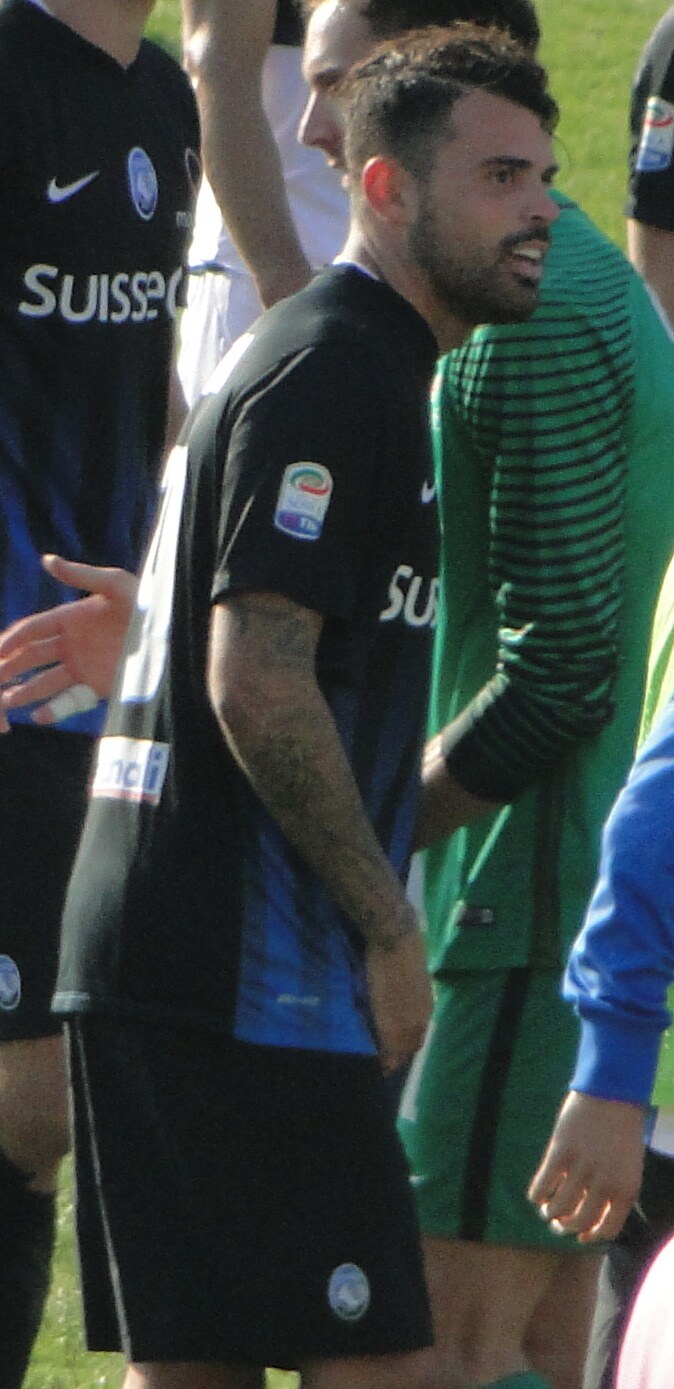
On 20 August Pisa and Monza completed a double transfer that reads like a short treatise in applied tactics: Andrea Petagna drops to Serie B, Idrissa Touré goes up to Serie A. Two players of almost the same age, both over 1.88 metres, swapping divisions because each solves a problem the other club has and their own does not.
The deal at a glance
| Item | Petagna | Touré |
|---|---|---|
| Born | 30 June 1995 (31) | 29 April 1998 (28) |
| Position | Centre forward | Right-sided midfielder |
| Height | 1.90 m | 1.88 m |
| Foot | Right | Right |
| From | Monza | Pisa |
| To | Pisa (Serie B) | Monza (Serie A) |
| Career | 253 Serie A appearances, 49 goals | At Pisa since 2021 |
| Last season | 9 goals in Serie B with Monza | 32 appearances and 1 goal in Serie A |
Two clubs heading in opposite directions
Context matters more than names here. Monza completed the Serie A 2026-27 field by winning the Serie B playoff final against Catanzaro, after Venezia and Frosinone went up automatically. Pisa made the opposite journey, relegated from the top flight along with Cremonese and Verona.
When two clubs cross paths like this, the market stops being a question of absolute value and becomes a question of fit with the division. A player who is decisive in Serie B can be marginal in Serie A, and the other way round, without either assessment being wrong.
What Serie B asks of a centre forward
Petagna is a 1.90 metre centre forward who plays with his back to goal, able to shield the ball and let the team push up. In Serie A that profile has become awkward, because defences are organised to attack the first touch and an isolated forward sees little of the ball.
In Serie B the calculation flips. It is a division where games get scrappy, where possessions are broken up earlier and where the long ball to the striker is not a tactical surrender but a recurring solution. A forward who wins the duel, holds the ball and waits for his teammates changes the geography of the pitch: he moves the team twenty metres further up without any need to build from the back.
The numbers describe a player suited to that job: 81 Serie B appearances with 17 goals and 6 assists, and nine goals last season, the one that took Monza back up. Those are not the numbers of a prolific scorer, they are the numbers of a reference point, which is exactly the role a freshly relegated side is buying.
What Serie A asks of a wide player
Touré travels the other way and brings a quality worth more in Serie A than in Serie B: ground coverage. He is a 1.88 metre midfielder used mainly on the right, right-footed, physical enough to handle duels and with a long enough stride to work the flank for ninety minutes.
In the top flight, where nearly every mid-table side defends with five across the back and attacks with two high wide men, this profile has become the most sought-after position on the market. A dribbler is not required; what is required is someone who covers the touchline in both directions without losing his composure the moment the ball is regained.
Public statistics for 2025-26 credit him with 32 appearances and one goal in Serie A, 26 of them as a starter: the usage of a trusted player rather than a squad option.
Why a swap instead of two signings
The shape of the deal says something about the late-August market. Swapping two players instead of buying them separately reduces the cash requirement for both clubs and books two movements that offset each other.
Press reports indicate Pisa also received around 2.3 million euros on top of Petagna’s registration. That is a journalistic indication rather than a club figure, but if accurate it describes a deal in which the side going down cashes in and the side going up fills a role.
What to expect on the pitch
For Pisa the issue is company. A centre forward who plays with his back to goal produces little if nobody attacks the space he vacates when he drops in: his effectiveness depends almost entirely on runners arriving from behind.
For Monza the question is the reverse and concerns defensive sustainability. A wide man who joins the attack has to be covered, and in Serie A positional errors are punished on a single transition. The opening weeks will show whether Touré is used higher, as a wide midfielder, or deeper, in a back five: that is the difference between an attacking signing and a balancing one, and right now neither reading can be verified.
Data and information gathered from public sources: official statements from Pisa Sporting Club and AC Monza of 20 August 2026, Italian sports media, public season statistics and biographical archives. Financial figures are those reported by the press and should be read as indications.
Frequently asked questions
How is the Pisa and Monza swap structured?
On 20 August 2026 Pisa announced the permanent signing of Andrea Petagna from Monza, inside a deal that takes Idrissa Touré the other way. According to the press Pisa also received around 2.3 million euros: that is a reported figure, not club-issued data.
Who is Andrea Petagna?
A centre forward born in Trieste on 30 June 1995, 1.90 metres tall, with 253 Serie A appearances (49 goals and 27 assists) and 81 in Serie B (17 goals and 6 assists). He has one senior cap for Italy.
Who is Idrissa Touré?
A German midfielder born in Berlin on 29 April 1998, 1.88 metres tall, right-footed, used mainly as a right-sided wide midfielder. At Pisa since 2021, public statistics credit him with 32 appearances and one goal in Serie A last season.
Why do the two clubs need opposite profiles?
Because they play in different divisions. Monza returned to Serie A by winning the playoff final against Catanzaro, Pisa went down to Serie B. The top flight asks for running and flank coverage, the second tier asks for a forward reference who can hold the ball when the team is pinned back.
How long is Petagna's Pisa contract?
Press reports describe a two-year deal with a renewal option tied to promotion back to Serie A. The club announced a permanent transfer without detailing the terms.