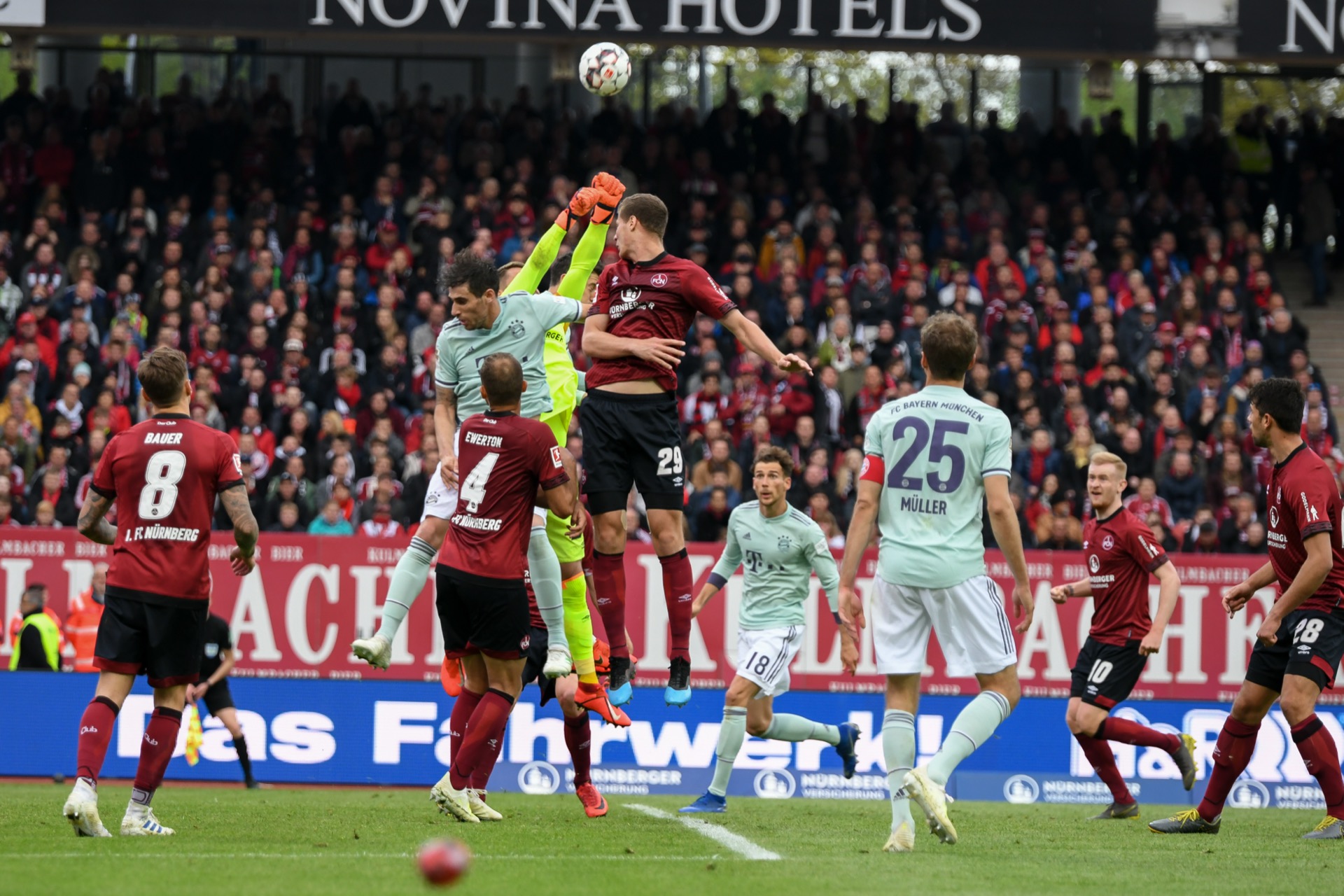
The Premier League returns on Friday 21 August with Arsenal against Coventry, and among the seasonal guidance issued by the competition there is one item covering an area of the pitch that has decided an enormous amount in recent years: the penalty box at set pieces. Referees are being asked to recognise obvious holding more sharply. This is not a new law of the game, it is guidance on how to apply one that already exists, and that is exactly why it can bite immediately.
What the guidance says
| Point | Content |
|---|---|
| General threshold | Not every contact is a foul, the bar for intervention stays high |
| Holding | Enhanced recognition of clear holding actions that materially affect an opponent |
| Main target | Actions with nothing to do with playing the ball |
| Attackers | Punishable when they impede the goalkeeper with no intention of playing the ball |
| VAR | Intervenes only for a clear and obvious error |
| Time-wasting | One minute off after treatment, five seconds on throw-ins and goal kicks, ten to leave the pitch |
Why now
Set pieces have become the phase of the game where clubs invest most heavily relative to expected return, and the reason is simple: it is the only situation that can be rehearsed in training exactly as it will appear in a match. Out of that come dedicated coaches, drilled routines and the clusters of players who set off together to free a team-mate.
The problem is that the technique has a moving boundary. Freeing a team-mate by running across his marker is legal. Holding that marker by the arm while the team-mate goes is not. Between the two there is a grey band a few centimetres wide, and inside that band a de facto tolerance has built up over the years: you hold because it never gets given, and it never gets given because everybody does it.
When a league tells its referees to look at that band more closely, it is not introducing a new prohibition. It is removing a habit.
Where the line runs
The distinction is worth making precisely, because everyday language merges two different acts.
A block is an action on space: I stand where the opponent wants to run and force him to go around me. The body is still, or moves in a way consistent with the play, and the defender loses a couple of tenths of a second. It is the basis of almost every attacking corner routine.
A hold is an action on the body: an arm around the waist, a hand on the shirt, a forearm planted on the back. It does not take away space, it takes away freedom of movement, and in the six-yard box taking half a stride off a header specialist is the same as taking away his header.
The guidance speaks explicitly of actions bearing no relation to any attempt to play the ball. That is the criterion referees will use to separate the two cases, and it is also the one every defender will use to build an alibi.
Who gains and who loses
The first expected effect concerns the choice of defensive system at corners. Man marking, which had come back into fashion precisely as an antidote to cluster movements, becomes riskier: following an opponent wherever he goes means having your body in contact for the whole routine, and more contact means more chances of being punished.
Zonal marking, which assigns spaces rather than men, reduces that risk but hands attackers back the advantage of the run-up. It is the same old trade-off, with the price on one side going up.
The second effect concerns attackers. They are covered too, with the explicit reference to impeding the goalkeeper without intending to play the ball: standing in front of the keeper to stop him coming out is as widespread a technique as defensive holding, and it is placed on the same footing.
The third effect is less technical and more arithmetical. If the shift works, the opening rounds will produce more penalties than usual. That is the typical signature of any refereeing realignment: an early spike, followed by player adaptation and a gradual return towards the mean.
What to watch from Friday
Three indicators can be tracked without sophisticated data.
The first is the number of penalties awarded at corners in the opening three or four matchweeks. It is the immediate thermometer: if it stays at zero, the shift has stayed on paper.
The second is defenders’ behaviour before the ball is struck. A defender who raises his arms demonstratively, lifting his hands off his opponent, is telling the referee he has got the message. It is the same adaptation basketball has shown for decades.
The third is the shape of attacking blocks. If teams keep using clusters, they still consider the space block safe. If they cut back, they fear the interpretation.
One honest caveat belongs at the end: seasonal guidance describes how a competition would like the game to be refereed, not how it will actually be refereed. The gap between the two will be measured by the matches, and in football that gap has often been wider than the circulars suggested.
Data and information gathered from public sources: official Premier League communications on seasonal guidance, British and international sports press, the official league calendar.
Frequently asked questions
What changes at Premier League set pieces in 2026-27?
The seasonal guidance asks referees to recognise clear holding in the box more sharply, especially actions that have nothing to do with playing the ball and that materially affect an opponent's ability to play or challenge for it.
Does that mean every contact in the box is now a penalty?
No. The same guidance repeats that not every contact is a foul and that the threshold for intervention stays high, with VAR stepping in only for a clear and obvious error.
Can attackers be punished too?
Yes. Attacking players face sanction when they make a clear action with no intention of playing the ball that stops the goalkeeper moving towards it.
What is the difference between a block and a hold?
A block means occupying space with your own body, and in general terms it is allowed. A hold acts on the opponent's body, with the arms or by grabbing the shirt, and restricts his freedom of movement.
When does the 2026-27 Premier League season start?
Friday 21 August 2026, with Arsenal against Coventry at the Emirates Stadium. It is Arsenal's first season as defending champions after winning the 2025-26 title.