For decades the goalkeeper was the only player who could stop a match without paying for it. From 2026-27 that is over: a delayed goal kick hands the opposition a corner, and in England stopping play for his injury costs his team a man for a minute. Two different interventions aimed at the same blind spot in the laws.
The changes at a glance
| Change | What it says |
|---|---|
| On-field treatment | A treated player stays off for at least one minute, double the previous Premier League threshold |
| Throw-ins and goal kicks | A five-second countdown for players clearly delaying the restart |
| Goal-kick sanction | The restart passes to the opposition, with a corner in the case of a goal kick |
| Goalkeeper injury | An outfield player leaves immediately and stays off for at least one minute |
| Where the trial applies | Men’s and women’s professional football in England, 2026-27 |
| VAR | Review only for a clearly wrong second yellow card |
Why the goalkeeper was a special case
In football, time is almost always taken in an individual and visible way: a player walking towards the bench, a throw-in prepared at leisure, a free-kick taken at the second attempt. All of those can be booked, and over the years all of them have been regulated.
Not the goalkeeper. He is the only one who can stop the game without moving: he sits down, calls for the physios, receives treatment. The difference from an outfield player is structural. A treated defender has to leave the pitch and his team is short until he returns, so faking costs him. A goalkeeper cannot be replaced by a team-mate in his position within thirty seconds, so the game waits for him, and his team loses nothing in the meantime.
The result was that the one position with a clean incentive to stop the match was also the only one without a sanction.
How the IFAB-approved trial works
The chosen mechanism is simple and does not ask the referee to judge intent. If play stops for a goalkeeper injury, the manager must immediately nominate an outfield player who leaves the pitch and stays off for at least one minute after the restart.
The consequence does not fall on the player who went down, it falls on the team. It is the same principle already applied to slow substitutions: the punishment lands on the collective and lands immediately, instead of passing through a card the player can simply accept.
There are three exceptions, covering the cases where the injury cannot be tactical: a free-kick awarded for a foul on the goalkeeper requiring immediate treatment, a collision between the goalkeeper and an outfield player where both need attention, and a goalkeeper who is bleeding.
The goal kick and the corner
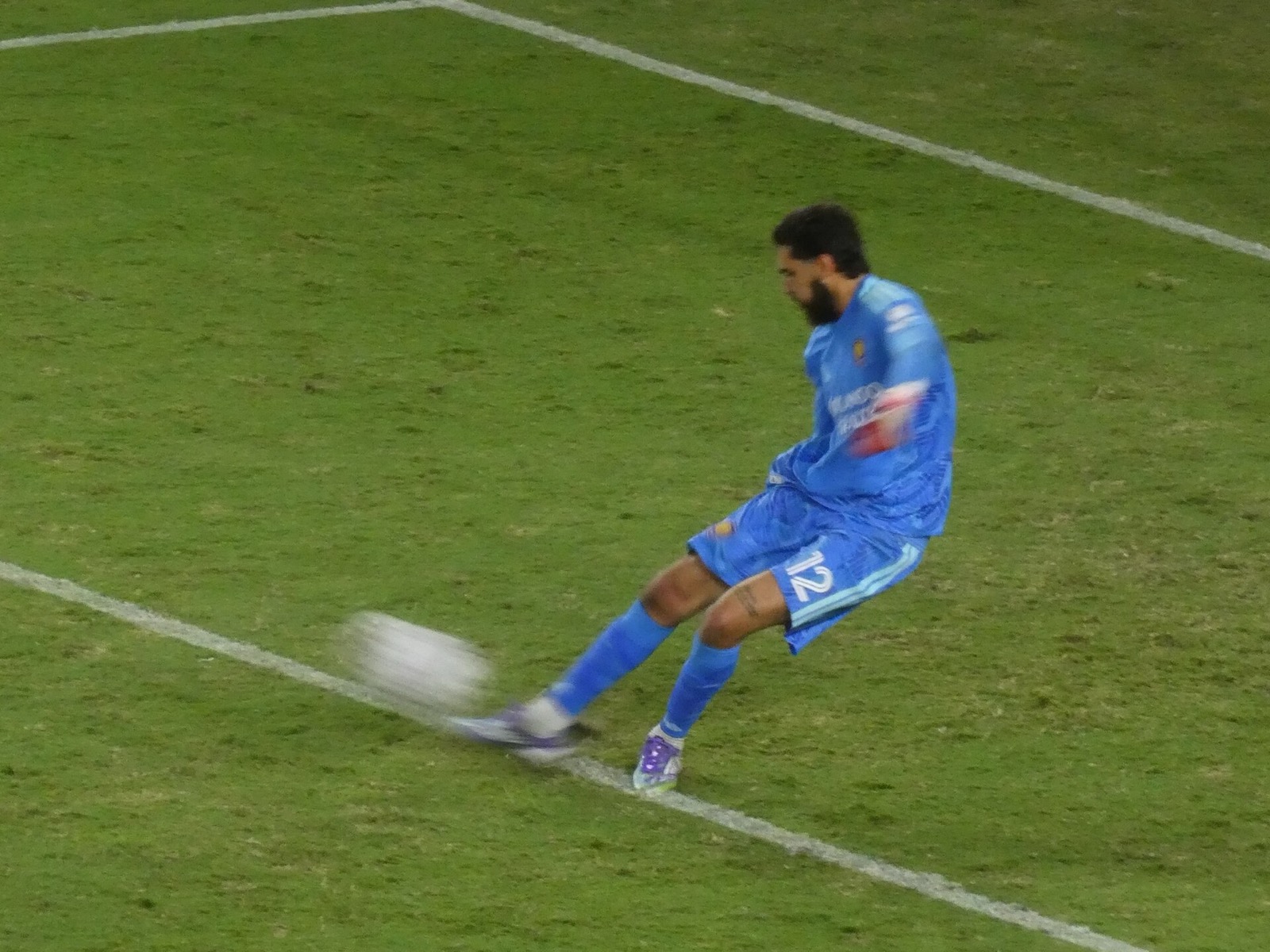
The second change is subtler but tactically heavier. The five-second countdown applies to throw-ins and goal kicks that are clearly being delayed, and the sanction is not a booking but the loss of the restart: the ball goes to the opposition, and in the case of a goal kick the opposing team gets a corner.
That is a disproportionate sanction relative to the offence, and that is precisely the point. In today’s game a conceded corner is worth far more on average than five seconds gained, because set pieces have become an organised, rehearsed source of goals. Turning time-wasting into a corner makes the arithmetic obvious even to a tired goalkeeper in the ninetieth minute.
What changes on the pitch
The first effect concerns the management of endgames. A team a goal up in the last ten minutes had a settled repertoire: slow substitutions, unhurried goal kicks, a goalkeeper staying down. Three of those items now carry a price.
The second concerns playing out from the back. A goalkeeper who knows he has five counted seconds once the referee starts the count can no longer use the goal kick as a breather for his team. The consequence is that starting positions have to be taken earlier, and the build-up plan has to be rehearsed in its fast version too.
The third is less visible and involves the bench. Having to pick within seconds which outfield player leaves when the goalkeeper stays down is a genuine tactical decision: being a centre-back short for a minute does not cost the same as being a winger short.
The point
Football is closing, one by one, the areas where stopping the game paid. The goalkeeper was the last of them, and the one where the advantage was largest precisely because nobody had ever codified it.
How far the English trial spreads remains to be seen. Rules born as experiments in a single league tend to become rules everywhere when they work, and this one has a quality the lawmakers like: it asks nobody to guess anyone’s intentions.
Sources: the official Premier League site, Laws of the Game communications for the 2026-27 season, international sports press.
Frequently asked questions
What happens if a goalkeeper delays a goal kick?
The official Premier League site lists for 2026-27 a five-second countdown for players clearly delaying throw-ins and goal kicks. If the time runs out, the restart passes to the opposition, and in the case of a goal kick the sanction is a corner.
What is the goalkeeper injury trial?
If play is stopped for a goalkeeper injury, the manager must immediately nominate an outfield player who leaves the pitch and stays off for at least one minute after the restart. It is an IFAB-approved trial running through 2026-27 across men's and women's professional football in England.
Are there exceptions to that rule?
Yes, three. It does not apply when a free-kick is awarded for a foul on the goalkeeper requiring immediate treatment, when the goalkeeper and an outfield player collide and both need attention, or when the goalkeeper is bleeding.
How long must a player treated on the pitch stay off?
At least one minute. In the Premier League the previous threshold was thirty seconds and it has been doubled.
What changes for VAR?
VAR now intervenes on a second yellow card only when it is clearly wrong, rather than on a potential second yellow. The Premier League has also declined several optional IFAB changes, including VAR reviews of incorrectly awarded corners.